This Serengeti National Park safari guide explains where to go in Tanzania’s most famous park, when to visit each zone, how to get there and how to combine it with Ngorongoro, Zanzibar and Kenya.
The Serengeti is the standard against which all other African safaris are measured. At 14,763 km² of unbroken savannah, kopje-studded plains, and Acacia woodlands, it is the largest continuous wildlife ecosystem on earth — the home of the Great Migration, home to the densest lion population on the continent, and the park whose name has become a global synonym for Africa’s wild magnificence.
Where the Masai Mara is the Serengeti’s northern extension across the Kenya border, the Serengeti is the whole: the migration calving grounds, the Grumeti River crossings, the vast central plains of the Seronera Valley, and the remote northern Lamai triangle where far fewer vehicles and far more lions define the experience. Sense of Adventure arranges Tanzania Serengeti safaris — either as standalone Tanzania trips or as part of combined Kenya-Tanzania East Africa circuits — and this Serengeti National Park safari guide tells you exactly how to use this extraordinary park.
✅ Serengeti National Park Safari Guide: The Quick Answer
- Where it is: northern Tanzania, bordering Kenya’s Masai Mara, and reached from Arusha or Kilimanjaro Airport.
- Why go: every Serengeti National Park safari guide starts with the same answer: the Great Migration, outstanding big cat sightings and huge, open plains that feel truly wild.
- Best time: January to March for calving in the south, June and July for the Grumeti River, and August to October for Mara River crossings in the north.
- How long: at least three nights; four or more if you want to move between zones.
- Getting there: a light-aircraft flight from Arusha, or a full day’s drive through the Ngorongoro Conservation Area.
- Best combined with: Ngorongoro Crater, Tarangire, Zanzibar or a Masai Mara safari in Kenya.
Book Your Serengeti Safari With Sense of Adventure
We design Serengeti itineraries that put you in the right part of the park at the right time — and combine seamlessly with Ngorongoro, Zanzibar, and the Kenya circuit. Contact us now.
Why Read This Serengeti National Park Safari Guide?
The Serengeti is huge, and the right plan depends on your travel month. Many travellers book “a Serengeti safari” without knowing that the herds can be hundreds of kilometres from their camp. This Serengeti National Park safari guide is written by our East Africa team to help you avoid that mistake and choose the right zone, the right number of nights and the right route.
The park was established in 1951 and is a UNESCO World Heritage Site. Its name comes from the Maasai word for “endless plains”, and once you see the short-grass plains of the south stretching to the horizon, you understand why.
The Serengeti by Zone — Where to Be and When
The Serengeti is not a single experience — it is five distinct zones, each with its own character, wildlife density, and optimal visiting season. Understanding the zones is the key to planning a Serengeti safari that uses the park rather than just visiting it.
Southern Serengeti — Calving Season (January–March)
The short-grass plains south of Seronera are where 500,000 wildebeest calves are born each year from late January through March — the largest simultaneous birthing event on earth. Predator activity peaks as lions, cheetahs, hyenas, and wild dogs feast on the vulnerability of newborns. The wide-open landscape, the extraordinary wildlife drama, and the relatively low visitor numbers during “green season” make this one of the Serengeti’s most compelling periods.
Seronera Valley — Year-Round Resident Wildlife
The Seronera Valley in the central Serengeti is the park’s most consistently wildlife-rich area — permanent water, dense Acacia woodland, and the highest resident lion, leopard, and cheetah density of any Serengeti zone. The central circuit roads around Seronera deliver Big Five sightings year-round regardless of migration position. For guests visiting outside migration season, Seronera is the Serengeti’s reliable core.
Western Corridor — Grumeti River Crossings (May–July)
As the migration moves north from the southern plains in May and June, the herds pile up at the Grumeti River — the first major water crossing of the annual circuit. The Grumeti holds enormous Nile crocodiles, and the crossings here, while smaller in scale than the Mara River, are arguably more dramatic for the proximity of the crocodile ambush. The western corridor is less visited and more intimate than the northern Serengeti.
Northern Serengeti — The Lamai Triangle (August–November)
The Lamai wedge in the northern Serengeti — the same migration as the Masai Mara but on the Tanzania side of the border — sees the herds crossing the Mara River in enormous numbers from August through October. Far fewer vehicles than the Kenya side, equivalent wildlife density, and some of the Serengeti’s most dramatic kopje landscape. Sense of Adventure designs northern Serengeti itineraries for guests who want the migration experience without the vehicle concentrations of the Mara.
Ndutu & the Ngorongoro Conservation Area Boundary
The Ndutu area on the Serengeti’s southeastern border with Ngorongoro is the calving ground’s epicentre — the short-grass plains where the wildebeest birth their calves in astonishing density from January to March. Ndutu’s combination of calving spectacle, lion prides, and the extraordinary Ndutu and Masek lakes (with flamingos and waterbirds) makes it one of the most rewarding short-stay destinations in Tanzania. Combines naturally with Ngorongoro Crater.

How to choose your zone with this Serengeti National Park safari guide
Start with your travel month, then match it to a zone. From January to March, stay in the south or at Ndutu. In April and May the herds spread out, and Seronera is the safest base. From late May to July, look at the Western Corridor. From August to October, head north to the Mara River. In November the herds begin moving south again, so a central camp keeps your options open.
If you have five nights or more, splitting your stay between two zones is the best way to see both the migration and the resident wildlife. Your Serengeti National Park safari guide and our team check herd reports before every trip and will tell you honestly where the action is likely to be.
Wildlife You Can See With a Serengeti National Park Safari Guide
The migration gets the headlines, but the Serengeti’s resident wildlife is excellent all year. Any honest Serengeti National Park safari guide should tell you that you do not need the migration to have a superb trip.
Big cats
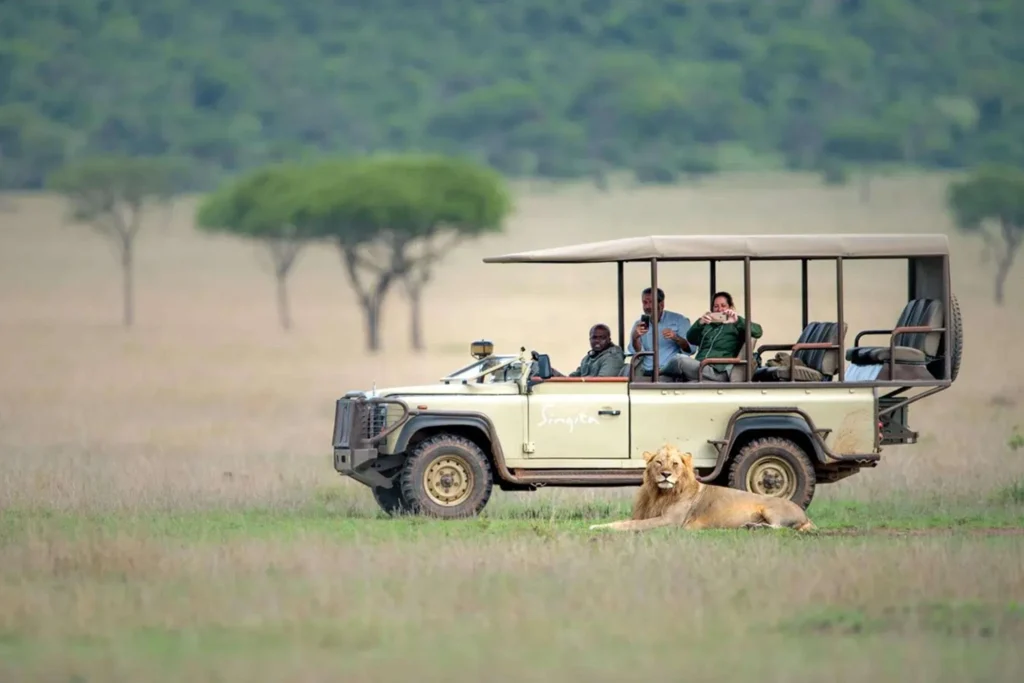
The Serengeti is one of the best places in Africa to see lions, with large prides across the plains and kopjes. Cheetahs hunt on the open short-grass plains, and leopards rest in the sausage trees and acacias along the Seronera River. Sightings are never guaranteed, but few parks give better odds, and an experienced Serengeti National Park safari guide knows the territories of local prides.
The Big Five and other wildlife
Lions, leopards, elephants and buffalo are seen regularly. Rhinos are present but very rare and hard to find, so most travellers see them in Ngorongoro Crater instead. Ask your Serengeti National Park safari guide about recent rhino sightings if they matter to you. You can also expect giraffe, hippos, topi, Thomson’s and Grant’s gazelles, spotted hyenas, jackals and huge Nile crocodiles in the rivers.
Birds
More than 500 bird species have been recorded, from ostriches and secretary birds to lilac-breasted rollers and several species of vulture. The green season, from November to April, is especially good for birdwatchers, as migrant species arrive from Europe and Asia. A good Serengeti National Park safari guide will happily stop for birds as well as big cats.
Best Time to Visit: Serengeti National Park Safari Guide by Season
There is no bad month in the Serengeti, but each season offers something different. Use this summary alongside the zone section of this Serengeti National Park safari guide.
- January to March: calving season in the south. Warm weather, green plains, excellent predator action and good value compared with the peak months.
- April and May: the long rains. Some camps close, roads can be muddy and prices are lowest, but the landscape is beautiful and visitor numbers are low.
- June and July: the dry season begins and the herds move through the Western Corridor towards the Grumeti River.
- August to October: peak season in the north, with Mara River crossings. This is the busiest and most expensive time, so book early. Your Serengeti National Park safari guide will plan around the crossing points each day.
- November and December: the short rains bring fresh grass, and the herds move back south through the east of the park.
Planning by month across both countries? Our Masai Mara or Serengeti month-by-month guide shows where the herds usually are throughout the year.
How to Get to the Serengeti
Flying into the Serengeti
Most international travellers fly into Kilimanjaro International Airport (JRO) or Arusha. From Arusha, light aircraft reach the Serengeti’s airstrips in roughly an hour, depending on your zone. Flying saves a long day on the road and lets you link the north and south of the park easily. Soft bags and luggage limits apply, usually around 15 kg per person. Your Serengeti National Park safari guide meets you at the airstrip with the vehicle.
Driving from Arusha
By road, the journey from Arusha takes most of a day and passes through the Ngorongoro Conservation Area, so it combines naturally with the crater, Lake Manyara and Tarangire. A road safari is usually better value and lets you see the changing landscape, from the farmland of Karatu to the endless plains, with your Serengeti National Park safari guide explaining each area as you go.
Travelling from Kenya
Although the Masai Mara and the Serengeti share a border, there is no open tourist crossing directly between them. Most travellers fly from Nairobi to Kilimanjaro or Arusha, or drive from Nairobi via the Namanga border to Arusha. We arrange the full route, including the right flights and road transfers, as part of our combined Kenya and Tanzania safaris.
Tanzania Safari Circuit: Serengeti + Ngorongoro + Zanzibar
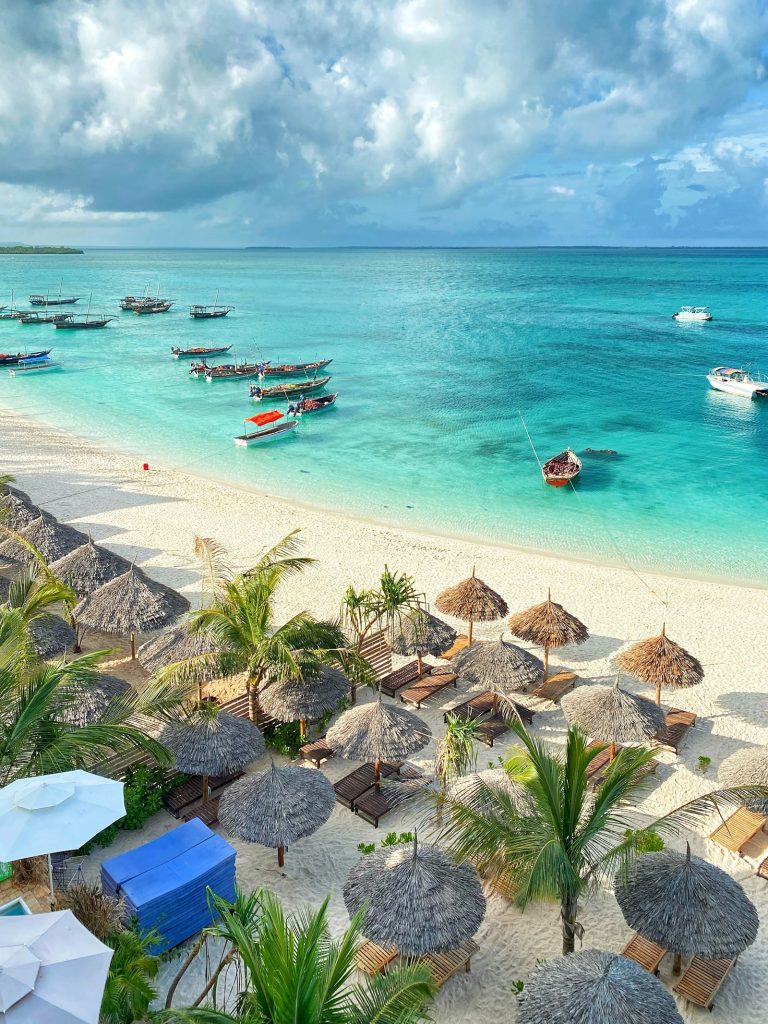
The classic Tanzania circuit that Sense of Adventure designs for most Tanzania guests: fly into Kilimanjaro Airport (JRO) or Arusha, 3 nights in the Serengeti (zone based on season), 1 night at the Ngorongoro Crater rim, descent into the crater for a morning game drive, then connect to Zanzibar for 3–5 nights of beach and Indian Ocean. Total: 7–10 days, all three of Tanzania’s headline experiences.
Read our Ngorongoro guide and Zanzibar guide for the complete picture, and our Serengeti vs Masai Mara comparison if you are choosing between the two parks.
Sample Serengeti itineraries
- 8-Day Tanzania Safari: the Serengeti, Ngorongoro, Tarangire and Lake Manyara by road from Arusha.
- 10-Day Kenya and Tanzania Classic Safari: the Masai Mara, the Serengeti and Ngorongoro Crater in one journey.
- 12-Day Great Migration Safari: river crossings in the Masai Mara and northern Serengeti, then the crater.
- 14-Day Kenya, Tanzania and Zanzibar Family Holiday: two countries of safari followed by five nights on the beach.
Where to Stay in the Serengeti
In any Serengeti National Park safari guide, accommodation choice comes second only to timing. Accommodation ranges from public campsites to permanent lodges and luxury tented camps. Many camps are seasonal “mobile” camps that move with the migration, so they are in the north from about July to October and in the south from about December to March. Permanent camps around Seronera are good all year.
Your choice of camp should follow your choice of zone. A beautiful lodge in the wrong area can mean long drives to the herds every day. Tell us your dates, budget and travel style, and we will suggest camps in the right part of the park, as this Serengeti National Park safari guide recommends.
What a Serengeti Safari Costs
The cost of a Serengeti safari depends on season, the type of camp, whether you fly or drive, and the size of your group. Park entry fees are charged per person for each 24-hour period inside the park, and there are separate fees for the Ngorongoro Conservation Area. Fees change, so check current fees with Tanzania National Parks (TANAPA) or ask us for an up-to-date quote. Fees quoted in any Serengeti National Park safari guide can date quickly, so always confirm them.
For a detailed comparison, see our guides to Kenya vs Tanzania safari cost and how much an African safari costs. If you are starting in Kenya, our Masai Mara safari packages and private Kenya safaris can be combined with the Serengeti.
Things to Do Beyond Game Drives
- Hot air balloon safari: a sunrise flight over the plains, usually followed by a bush breakfast. It is one of the most memorable experiences in the Serengeti and is best booked in advance.
- Full-day game drives: with a picnic lunch and your Serengeti National Park safari guide, these let you reach distant areas and stay with sightings for longer.
- Cultural visits: on the way to or from the park, you can visit a Maasai community in the Ngorongoro highlands.
- Walking: guided walks are offered by some camps in permitted areas, usually with an armed ranger.
What to Pack for the Serengeti
- Neutral clothing: khaki, beige and olive; avoid dark blue and black, which attract tsetse flies in some areas.
- Warm layers: early mornings and the Ngorongoro rim can be surprisingly cold.
- Sun protection: a wide-brimmed hat, sunglasses and high-factor sunscreen.
- Binoculars and a zoom lens: distances on the plains are large, so a 200–400mm lens is ideal.
- Dust protection: a buff or scarf and a bag for your camera, especially in the dry season.
- Soft-sided bag: required for light-aircraft flights.
Practical Tips From Our Serengeti National Park Safari Guide
- Follow the herds, not the brochure: choose your camp by month and zone.
- Allow enough time: three nights is a minimum, and four to five is better, giving your Serengeti National Park safari guide time to find the herds.
- Book peak months early: camps near the Mara River fill many months ahead for August and September.
- Check entry rules: apply for your Tanzania visa through the official channels and check health requirements, including yellow fever rules if you are travelling from Kenya.
- Read travel advice: see the UK government’s Tanzania travel advice before you go.
14,763 km² of Pure Africa. We Know Every Kilometre.
Sense of Adventure designs Serengeti itineraries around your dates and the migration calendar — putting you in the right zone at the right time. Contact us to start planning.
Frequently Asked Questions — Serengeti National Park
When is the best time to visit the Serengeti?
Every month in the Serengeti offers excellent wildlife, but the peak experiences are: January–March (calving in the southern plains — extraordinary predator action), June–July (Grumeti River crossings in the western corridor), and August–October (maximum wildebeest density in the north, Mara River crossings). Sense of Adventure routes guests to the correct zone for their specific travel dates.
Is the Serengeti or Masai Mara better for safari?
Both deliver the same Great Migration — the Mara and Serengeti are the same ecosystem split by an international border. The Serengeti is larger, more varied, and less crowded per hectare. The Masai Mara is closer to Nairobi and has more accessible private conservancies with night drives. Our dedicated Serengeti vs Masai Mara comparison covers this in full detail.
How do I get to the Serengeti?
From Arusha or Kilimanjaro Airport by charter flight (30–50 minutes to various Serengeti airstrips) or by road (5–7 hours from Arusha via the Ngorongoro Conservation Area). Sense of Adventure arranges all Serengeti transfers — we typically use charter flights for guests on 5+ night Tanzania safaris for efficiency, and road transfers for guests combining Serengeti with Ngorongoro and Tarangire.
Can I combine Kenya and Tanzania in one safari?
Yes — and Sense of Adventure specialises in Kenya-Tanzania combined circuits. The classic combination: Masai Mara (Kenya) + Serengeti + Ngorongoro (Tanzania) + Zanzibar. Alternatively: Amboseli (Kenya, Kilimanjaro views) + Serengeti + Zanzibar. Flying between parks and countries takes 1–2 hours; Sense of Adventure handles all cross-border logistics, visas advice, and flight bookings.
How many days do I need in the Serengeti?
This Serengeti National Park safari guide recommends at least three nights in the park, which gives you two full days of game drives. Four or five nights is better, especially if you want to see both the migration and the resident predators, or split your stay between two zones. Add one night for Ngorongoro Crater on the way in or out.
Is the Serengeti safe for a family safari?
Yes. The Serengeti is a well-managed national park, and travelling with a professional Serengeti National Park safari guide in a safari vehicle is very safe. Families should choose camps that welcome children and allow plenty of rest between drives. Check age rules for balloon flights and walks, and speak to your doctor about malaria prevention before you travel.
We hope this Serengeti National Park safari guide helps you plan with confidence. For official park information, visit Tanzania National Parks (TANAPA), and read about the park’s World Heritage status on the UNESCO World Heritage Centre website. Then send us your dates, and we will build the right Serengeti route for you.
🏑 Ready to Book Your Serengeti Safari?
Sense of Adventure — East Africa experts with real local knowledge. Transparent pricing. Personalised itineraries across Kenya and Tanzania.
💬 Plan My Safari on WhatsAppCall or WhatsApp: +254 799 160 081