

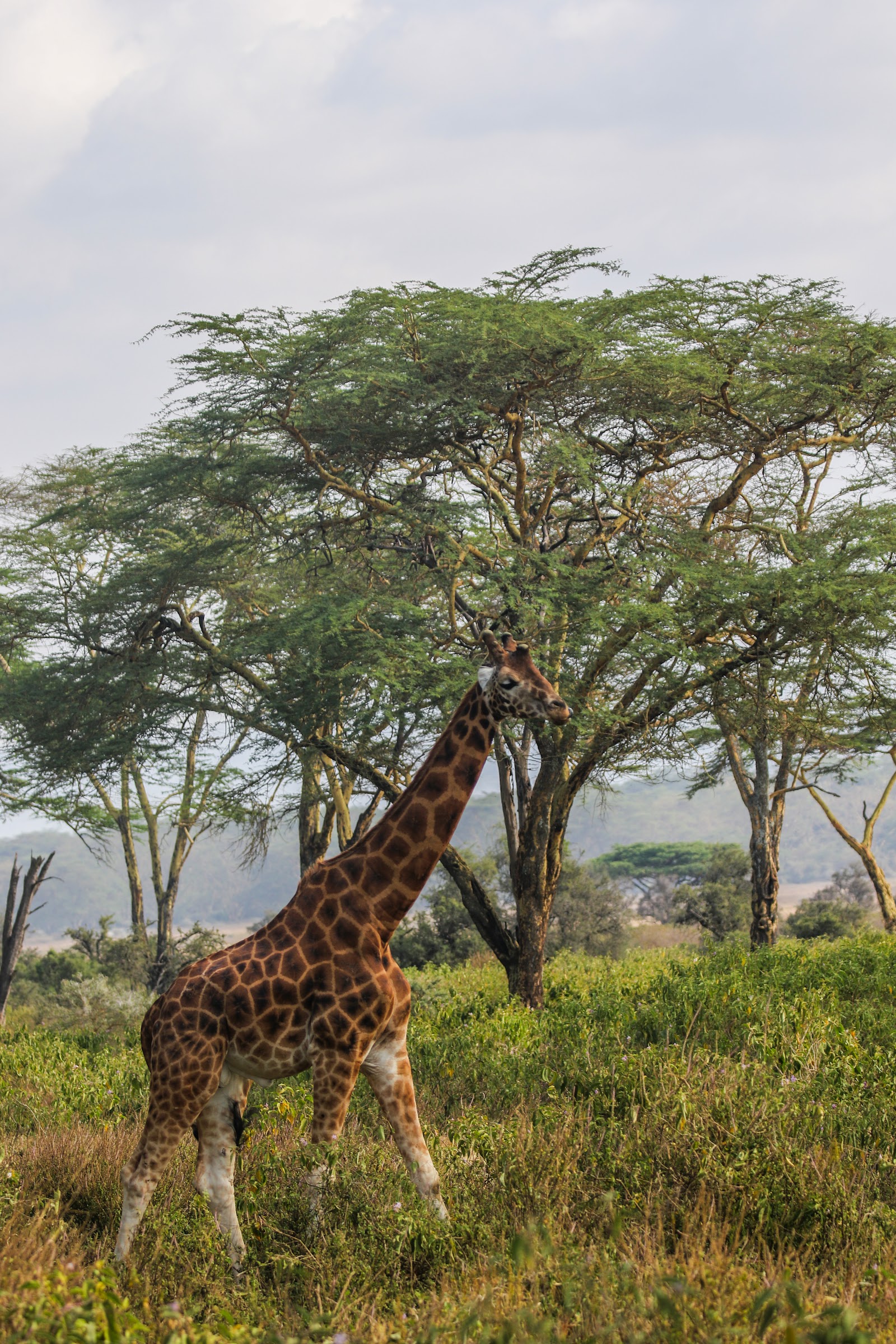
Masai Mara giraffes move through the reserve’s acacia woodland with an unhurried grace that makes five-metre height look effortless, and after a few days on safari most guests stop actively looking for them — not because giraffes become boring, but because they become a kind of gentle punctuation to every single game drive, always somewhere on the horizon browsing thorn trees no other animal can reach. The Masai giraffe, largest of all giraffe subspecies and easily distinguished by its ragged, oak-leaf-shaped blotches, calls this ecosystem home in genuinely healthy numbers. Slow down for them properly, though, and giraffes reveal one of the Mara’s richest and most photogenic behavioural repertoires — courtship necking that looks like combat, creche herds of unrelated calves, and towers silhouetted against every Mara sunset ever photographed. Sense of Adventure guides build real giraffe-watching time into every itinerary, not just drive-by glances.
Slow Down for the Reserve’s Gentle Giants
Necking bulls, creche herds and acacia silhouettes — ask us to build real giraffe time into your Mara game drives.
Why the Masai Giraffe Thrives in This Ecosystem
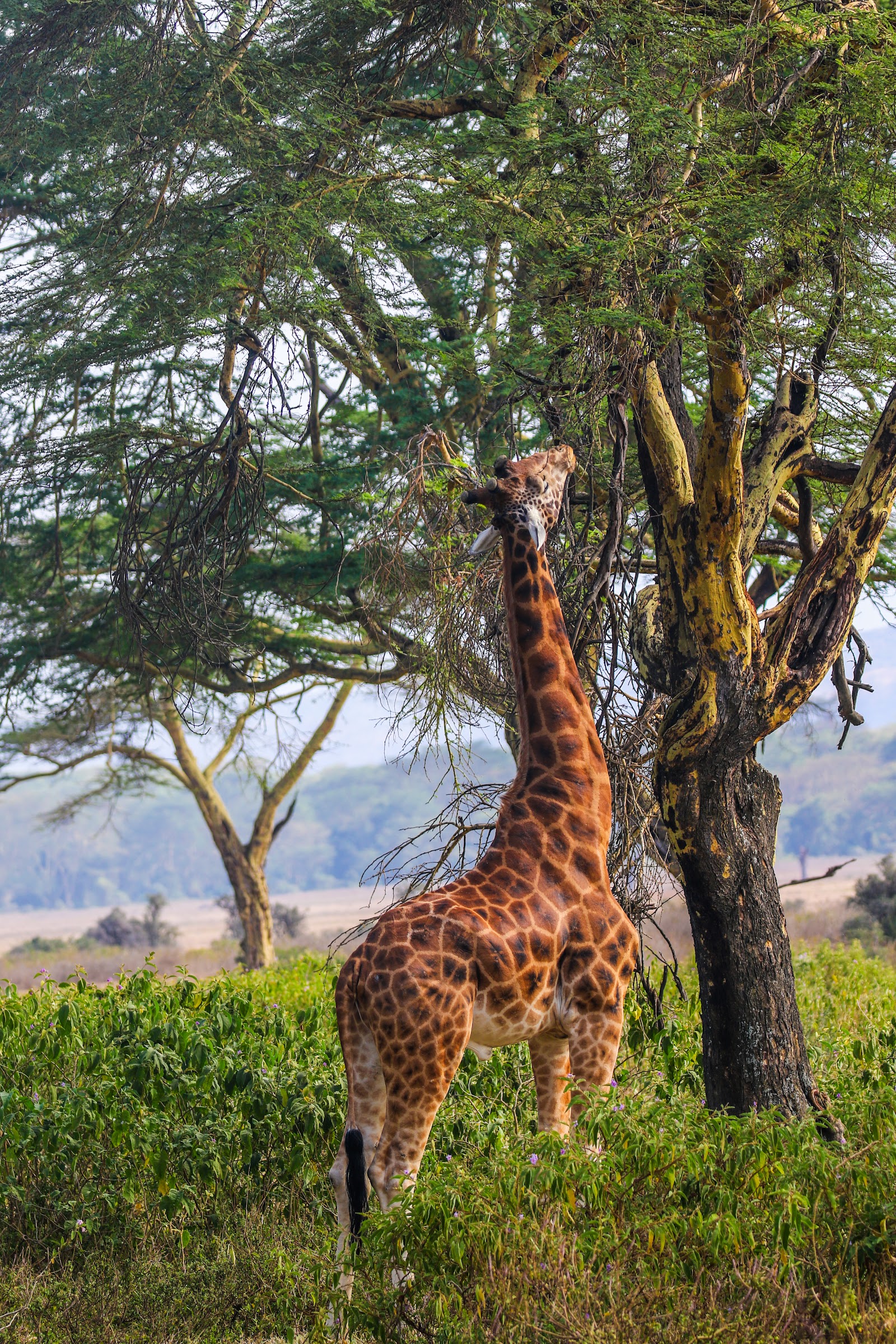
The Masai giraffe — the largest of the giraffe subspecies and instantly recognisable by its jagged, star-shaped, deep-brown patches fading toward pale legs — is the Mara’s resident giraffe, sharing the acacia woodland and open transition zones with elephants and antelope rather than competing with them, since giraffes browse foliage two to five metres up that almost nothing else on the plain can reach. A giraffe’s eighteen-inch prehensile tongue and thickened, saliva-coated mouth let it strip leaves from thorny acacia branches most browsers avoid entirely, and an adult needs up to 34 kilograms of foliage daily to sustain that towering frame. Healthy population numbers across the Mara ecosystem reflect both this uncontested feeding niche and generally low predation pressure on adults — though newborn calves, hidden in grass for their first weeks, remain vulnerable to lions and hyenas, and giraffe mothers are known for genuinely fierce, kick-first defence of their young. Genetic research in the past decade has also reshaped how scientists classify giraffes, with mounting evidence suggesting the four main giraffe populations — including the Masai giraffe found here — may in fact be four distinct species rather than subspecies of one, a reclassification that would make the animal browsing beside your vehicle one of only a handful of giraffe species left on the entire planet.
We stopped for what I thought would be a two-minute photo and stayed forty because two bulls started necking — swinging their heads into each other’s flanks like slow-motion pendulums. Our guide explained it was about hierarchy, not real aggression, but it looked completely brutal in the best possible way. I’d never really looked at a giraffe properly before that morning.
— Sense of Adventure guest, Masai Mara safari
The 7 Essential Masai Mara Giraffe Behaviours to Watch For
Necking Contests — courtship theatre disguised as combat
Bulls establish dominance and breeding rights by swinging their necks to deliver heavy blows with their skull-plated heads (called ossicones) into a rival’s neck, shoulders or legs — a slow, almost choreographed contest that can look startlingly violent but is rarely fatal. Winners earn priority access to receptive females; losers simply withdraw, no lasting grudge held.
The Splay-Legged Drink — the most vulnerable pose in Africa
A giraffe drinking must splay its front legs wide and lower its head nearly two metres to reach water — an ungainly, slow posture that leaves it dangerously exposed to ambush predators for the only moment in its day it cannot easily flee. Watching this rare vulnerability play out at a Mara waterhole is a genuinely tense, memorable sighting.
Creche Herds — communal calf-minding on the plains
Female giraffes form loose “creche” groups where several mothers leave calves together under the watch of one or two adults while the others range off to feed — a cooperative strategy that improves calf survival odds against lion and hyena predation. Spotting a knot of young giraffes minded by a single patient female is a lovely, easily overlooked Mara scene.
The Towering Silhouette — the Mara’s signature sunset shape
A giraffe’s head-and-neck outline against a burning Mara sunset, often paired with a lone flat-topped acacia, is one of the most reproduced images of African safari — and one of the easiest to actually capture, since giraffes browse calmly at dusk and rarely flee a slow, respectful approach.
Reading the Ossicones — a quick way to sex a giraffe at distance
Both sexes carry the skin-covered horn-like ossicones atop the skull, but males’ are typically thicker, balding on top from years of necking impact, while females’ stay slender and tufted with hair. Learning this one detail lets you sex a distant giraffe correctly without needing to see anything else.
Giraffe and Zebra Mixed Herds — safety in mismatched company
Giraffes’ height gives them an early-warning advantage over predators moving through tall grass, and zebra, wildebeest and antelope frequently graze near towers specifically to benefit from that extended sightline — a loose but genuine multi-species alarm system you can watch functioning in real time on almost any Mara drive.
The Long Walk to Adulthood — a calf’s precarious first year
A newborn Masai Mara giraffe calf must be walking within an hour of birth and stands roughly 1.8 metres tall from day one, yet still faces serious predation risk from lions and hyenas through its first several months — mothers often leave calves hidden and motionless in tall grass for hours while they range off to feed, relying on camouflage rather than defence until the calf is strong enough to keep pace with the herd.
Photograph the Tower Properly
Golden-hour positioning and patient necking-contest waits — ask for a giraffe-focused session on your game drive.
Masai Mara Giraffe Facts
- Species: the Masai giraffe, the largest giraffe subspecies, with jagged, oak-leaf-shaped brown patches and pale lower legs.
- Height: bulls can reach 5.5 metres; even newborn calves stand around 1.8 metres within hours of birth.
- Diet: up to 34 kg of foliage daily, stripped from acacia and other thorn trees using an 18-inch prehensile tongue.
- Social structure: loose, fluid herds without strong permanent bonds, though females form creche groups to share calf-minding duties.
- Necking: male dominance contests using the neck and head, establishing breeding hierarchy with rarely serious injury.
- Sleep: giraffes need remarkably little sleep — often under 30 minutes total per day, taken in short standing or kneeling bursts.
- Vulnerability: calves face heavy predation risk in their first weeks; adults are rarely taken except at the exposed drinking posture.
Pairing Giraffe Watching With the Rest of Your Safari
Giraffe sightings punctuate every drive on our 3-day Masai Mara safari, and photographers chasing the sunset-silhouette shot should read our Masai Mara photography guide. For the Mara’s other browsing giants, see our Masai Mara elephants guide and the antelope & plains game guide to round out the herbivore picture.
The Mara’s Gentlest Giants Are Waiting
Slow down, watch the necking, catch the sunset silhouette. Message us to build giraffe time into your safari.
Frequently Asked Questions
What type of giraffe lives in the Masai Mara?
The Masai giraffe lives in the Masai Mara — the largest giraffe subspecies, identifiable by its jagged, star-shaped, deep-brown patches that fade to pale, unmarked legs, distinct from the neater rectangular patterns of reticulated or Rothschild’s giraffes found elsewhere in Kenya.
Why do giraffes swing their necks at each other?
Masai Mara giraffes swing their necks in a behaviour called necking to establish male dominance hierarchy and breeding priority, delivering blows with their skull-plated ossicones. It looks dramatic but is rarely seriously injurious, and losers simply disengage rather than fight to the death.
How tall do Masai Mara giraffes get?
Masai giraffe bulls in the Mara can reach about 5.5 metres tall, making them the tallest giraffe subspecies and the tallest land animal on earth. Even newborn calves stand roughly 1.8 metres within hours of birth after a fall from that considerable height.
Are giraffes dangerous in the Masai Mara?
Giraffes are generally placid and not dangerous to safari vehicles, but a mother giraffe defending a calf can deliver a powerfully forceful kick capable of killing an attacking lion — a fact guides always respect when giraffes with young are nearby.
What is a group of giraffes called?
A group of giraffes is called a tower, though Masai Mara giraffe herds are actually loose and fluid, with individuals joining and leaving frequently rather than maintaining fixed group membership — except among females forming temporary creche groups to share calf-watching duties.