A Kenya safari for families is one of the world’s great shared adventures — and when it is planned well, it becomes the trip that children and parents talk about for the rest of their lives. Lions, elephants, cheetah cubs, zebra crossing the plains — wildlife at this scale and this intimacy creates a connection with the natural world that no aquarium, zoo or wildlife documentary can match.
Kenya is one of Africa’s most family-friendly safari destinations, with a combination of accessible wildlife, kid-appropriate activities, short internal flights and a culture of real warmth towards visiting families. Children are welcomed in camps, guides love sharing their knowledge with young people, and many lodges now build family suites and activities specifically for them.
At Sense of Adventure, we have designed family safaris for children as young as two and as old as eighteen. This guide distils everything we have learned about making a Kenya safari for families work beautifully for every age group, from choosing the right parks and camps to timing, health, packing and budgeting.
In short: the best Kenya safari for families combines a private vehicle, two or three parks with short transfers (for example Nairobi, Lake Naivasha and the Masai Mara), a camp with a family tent and a pool, and a few days in each place rather than a new lodge every night. July, August and December suit school holidays; January and February offer quieter camps and better value.
Why Choose a Kenya Safari for Families?
Kenya packs an extraordinary amount of wildlife into a relatively compact area, and that matters with children. On a good morning in the Masai Mara you can see lions, elephants, giraffes, zebras and hippos within a couple of hours, which keeps even short attention spans engaged. Drives between the classic parks are manageable, and light aircraft can cut a long road journey to under an hour.
The country also offers far more than game drives. Children can feed giraffes in Nairobi, watch orphaned baby elephants at feeding time, take a boat ride among hippos on Lake Naivasha, cycle past zebras at Hell’s Gate and finish with a few days on the Indian Ocean coast. That variety is what makes a Kenya safari for families so rewarding: there is always something new around the corner.

What Age Is Right for a Kenya Safari?
This is the question every family asks first. The honest answer depends on the specific camp and the style of safari you are planning. Here is a general guideline:
- Under 5: Some camps have minimum age restrictions (typically 6 or 8 years old) for standard game drives, for safety reasons. However, a number of family-specialist camps and private conservancies welcome young children and offer private vehicles that give flexibility for nap schedules and shorter drive times. Toddler and infant safaris are possible with the right planning and the right camp — we can advise specifically.
- 5–8 years: This is where the magic starts to really work. Children this age are captivated by wildlife with a wholehearted enthusiasm that adults rediscover through their eyes. Safaris for this age group benefit from camps with shorter morning drives, pool access for midday energy release, and guides who enjoy engaging with children.
- 8–12 years: Excellent safari age. Old enough to appreciate the ecosystem discussions, focused enough to sit through a long predator sighting, and young enough to experience everything with unfiltered wonder. Kenya produces extraordinary memories for this age group.
- Teenagers: Teens who have any interest in wildlife, conservation, or photography will find Kenya transformative. The Masai Mara’s drama, the scale of the migration, the intimacy of a leopard encounter — these are experiences that shift perspective at any age, but particularly during formative teenage years. See our guide to a Kenya safari with teenagers for activity ideas.
Travelling with a baby or toddler, or while pregnant, raises extra questions about malaria, camp age limits and vehicle safety. Our detailed guide to a safari with babies, toddlers or while pregnant covers these in depth.
Is a Kenya safari for families with young children safe?
Yes, when it is planned sensibly. Children stay inside the vehicle during game drives, camps have clear rules and staff who escort guests after dark, and a private guide can adjust every drive to your children’s needs. The main health considerations are malaria prevention, sun protection and safe drinking water, all of which are manageable with advice from your doctor and a well-run camp.
Best Destinations for a Kenya Safari for Families
Masai Mara National Reserve is the top family choice for most Kenya safari itineraries — the wildlife density is simply unmatched, meaning families with shorter attention spans still see extraordinary animals on every drive. See our complete Masai Mara safari guide for full details. Within the Mara ecosystem, choose a conservancy camp with private vehicle access for families with young children — the flexibility to adjust drive timing is invaluable. Our parent’s guide to a Masai Mara family safari goes into more detail.
Amboseli National Park is excellent for families. The open landscape means wildlife is easy to spot (no searching through dense bush), the elephants are extraordinary and often very close, and the Kilimanjaro backdrop creates images that become family favourites for years. The shorter drive times required to see great wildlife suit younger children well.
Ol Pejeta Conservancy in Laikipia is outstanding for families interested in conservation. The opportunity to see the world’s last two northern white rhinos, visit the chimpanzee sanctuary, and engage with the conservancy’s anti-poaching and wildlife monitoring programmes makes for an intellectually enriching experience that complements the pure wildlife excitement of the Mara.
Lake Naivasha and Hell’s Gate are a short drive from Nairobi and ideal for active children. A boat ride brings you close to hippos and fish eagles, a guided walk on Crescent Island lets you stroll among giraffes and zebras, and Hell’s Gate National Park allows cycling among plains game. Read our Hell’s Gate National Park guide to plan a visit.
Nairobi’s family attractions — the Sheldrick Wildlife Trust’s elephant nursery (orphaned elephant calves up close — a highlight for any child) and the Giraffe Centre (feeding Rothschild’s giraffes eye-to-eye from a raised platform) — make excellent pre or post-safari additions that perfectly frame the national park experience. Learn about the orphans’ rescue work on the Sheldrick Wildlife Trust website.
The Kenyan coast is the perfect way to end a family trip. Diani Beach offers calm, warm water, a coral reef and plenty of space for children to unwind after early safari starts. Many families spend three or four nights here before flying home.
What to Look for in a Family Safari Camp
Not every camp suits a Kenya safari for families equally well. When we select camps for our family safari guests, we look for:
- Private vehicle availability: Eliminates the constraint of shared-vehicle game drive timing and allows flexibility for younger children’s needs.
- Family tent or family suite: Inter-connecting rooms or a spacious family unit — not just a standard tent with a cot squeezed in.
- Pool: Essential for midday energy release, particularly for children 5–12.
- Child-friendly guiding: Experienced guides who enjoy engaging with children, explaining animal behaviour, teaching tracking, and making every drive educational and exciting.
- Safe camp perimeter: Most serious safari camps have secure perimeters and clear protocols for children — ask specifically about camp safety measures when booking with young children.
- Flexible meal times: Families with young children benefit from camps that accommodate earlier dinner times rather than the standard 8:00 PM camp dinner schedule.
Tented camp or lodge for a Kenya safari for families?
Both work well. Lodges usually have solid walls, fixed family rooms and larger pools, which many parents of young children find reassuring. Tented camps feel closer to nature, with the sounds of the bush at night, and good ones have family tents with two bedrooms under one roof. For children under eight, a lodge or a camp with connected family tents is usually the easier choice.
Best Time for a Family Kenya Safari
School holiday alignment matters most when planning a Kenya safari for families. Here are the best options by holiday window:
- July–August (summer holidays): Peak migration season — the most dramatic game viewing of the year, coinciding neatly with long school holidays in the UK, US, and elsewhere. Book camps 6–8 months ahead; peak season pricing applies but the experience is extraordinary.
- December–January: Christmas and New Year in Kenya is magical — festive camp atmospheres, green landscapes, and excellent wildlife. January’s green season delivers great game viewing at lower prices than August.
- April–May: School holiday timing varies; this is the long rains season in Kenya, with the lowest prices of the year. Families comfortable with the possibility of rain will find extraordinary value and very few other visitors.
- February half-term and October half-term: Both fall in drier, quieter periods and are ideal for a shorter one-week Kenya safari for families.
For detailed seasonal advice, see our best time to visit Masai Mara guide. For cost planning for your family, the Kenya safari cost guide breaks down how group size and season affect total pricing.
A Sample 7-Day Kenya Safari for Families
This outline shows how we usually pace a first Kenya safari for families with children aged roughly five to twelve. Every element can be changed to suit your dates, budget and children’s ages.
- Day 1 – Nairobi: Arrive, meet your guide and rest at a family-friendly hotel after the long flight.
- Day 2 – Nairobi highlights: Morning visit to the elephant orphans at feeding time, then the Giraffe Centre, with an afternoon drive in Nairobi National Park if energy allows.
- Days 3–4 – Lake Naivasha: A short drive into the Rift Valley for a hippo boat ride, a walk on Crescent Island and a cycling morning in Hell’s Gate.
- Days 5–7 – Masai Mara: Three nights of game drives timed around your children, a Maasai village visit and the option of a balloon flight for older children, then a short flight back to Nairobi.
Our ready-made Kenya Family Safari – Nairobi, Lake Naivasha & Masai Mara (5 Days) follows this rhythm in a shorter form. Families with younger children may prefer the gentle Lake Naivasha Family Safari with Hell’s Gate and Lake Nakuru, while those wanting beach time can choose the Family Safari & Beach – Tsavo, Amboseli & Diani (8 Days).
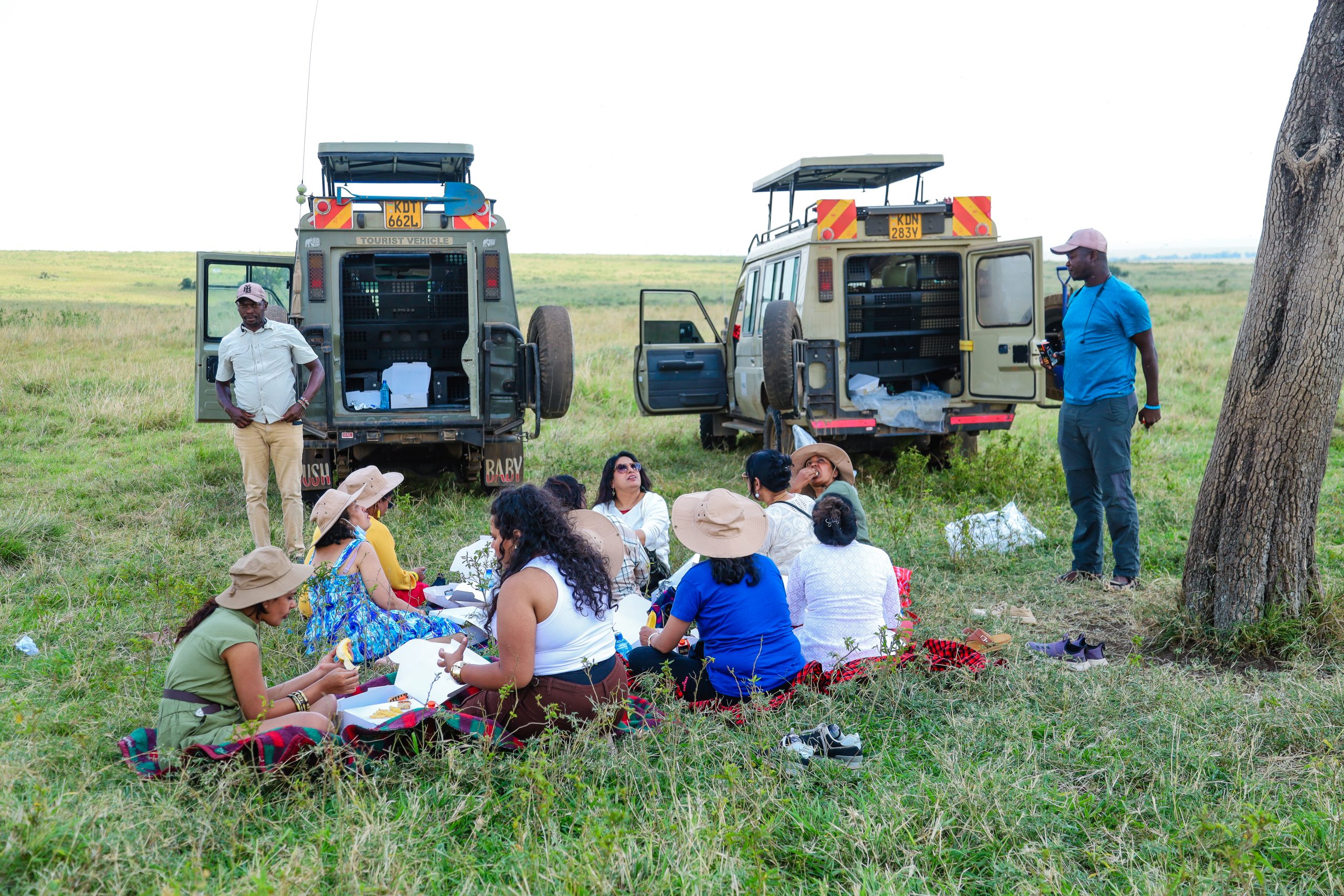
Safari Activities for Children
- Junior Ranger programmes: Some Masai Mara camps run structured junior ranger activities — tracking, bush craft, bird identification — that give children a participatory role in the safari rather than just passive observation.
- Maasai cultural visits: Meeting and learning from Maasai families in their traditional boma is deeply memorable for children, particularly the traditional music, jumping competitions, and village activities.
- Night game drives (conservancy camps): For children 8+, an evening night drive searching for nocturnal wildlife with spotlights is an extraordinarily exciting experience.
- Guided bush walks: Short, gentle walks with an armed ranger (for children 8+ at most camps) bring children into direct contact with the smaller wonders of the ecosystem — tracks, insects, medicinal plants, and the sounds of the bush at ground level.
- Boat rides and cycling: Lake Naivasha’s hippo boat trips and the cycling trails of Hell’s Gate let children burn off energy while still watching wildlife.
- Wildlife spotting games: A simple checklist of animals and birds turns every drive into a treasure hunt. Many guides happily join in and award points for the best spot of the day.
Keeping children happy on long game drives
Plan shorter morning drives of two to three hours with young children, then return to camp for the pool and lunch. Bring snacks, water, a small pair of binoculars for each child and a light blanket for cold starts. Ask your guide to explain what the animals are doing: a lion sleeping becomes far more interesting when a child learns why lions rest for most of the day.
Health and Safety on a Family Safari
Visit your doctor or a travel clinic six to eight weeks before departure to discuss vaccinations and malaria prevention for each family member, as doses and options differ for children. Pack child-strength repellent, high-factor sunscreen and a simple first-aid kit. The UK government’s Kenya travel advice is a useful, regularly updated source on health and entry rules.
Every traveller, including children, needs an approved Electronic Travel Authorisation before flying to Kenya. Apply only through the official Kenya eTA portal, and make sure each child’s passport has enough validity. Travel insurance with medical evacuation cover is essential; our Kenya travel insurance guide explains what to check.
Packing for a Family Safari
See our comprehensive African safari packing guide for a full list. Specific additions for families with children: child-specific DEET insect repellent (lower concentration formulas for young children), UV-protective swimwear and rash guards for pool time, motion sickness medication if any family member is susceptible (bush roads can be bumpy), and a small set of nature identification cards or a junior field guide to engage children between sightings.
Remember that light aircraft flights to safari airstrips usually allow only soft bags with a strict weight limit per person, including children. Pack each child’s clothes in a small soft duffel and keep favourite comfort items in hand luggage.
Budgeting for a Kenya Safari for Families
The cost of a Kenya safari for families depends on the season, the style of camp, the number of nights and whether you fly or drive. Many camps and lodges offer reduced rates for children sharing with parents, and some include children under a certain age free of charge, so always ask. Park fees for children are also lower than adult fees in most Kenyan parks.
A private vehicle costs more than a shared one, but for families it is usually the best value upgrade, because the whole day runs on your children’s schedule. Travelling in January, February, June or November rather than peak August can also make a noticeable difference. Our multigenerational family safari guide explains how larger family groups can share costs.
Plan Your Kenya Family Safari With Us
Family safaris require more detailed planning than solo or couple trips — the right camp pairing, the right vehicle arrangement, the age-appropriate activities, and the timing around school calendars. Our team has designed family itineraries across every age group and every budget. Talk to us — we love helping families create memories that last a lifetime.
Kenya Safari for Families: Frequently Asked Questions
What is the best age for a Kenya safari for families?
Children aged about six to twelve often get the most from a Kenya safari, as they are old enough for most camps’ age rules and sit happily through long sightings. Younger children can travel too with a private vehicle and a family-friendly camp. Teenagers enjoy walking safaris, photography and conservation activities.
How long should a family safari in Kenya be?
Six to eight days suits most families, with two or three nights in each place so you avoid packing every day. Add a rest night in Nairobi after the long-haul flight. If you want a beach finish, ten days lets you include three or four nights on the coast without rushing the safari.
Which park is best for a Kenya safari for families?
The Masai Mara is the best single park for families because animals are easy to find and sightings are frequent. Combine it with Lake Naivasha for boat rides and cycling, or Amboseli for elephants and Kilimanjaro views. Ol Pejeta is excellent for older children interested in rhinos and conservation.
Do children need a private vehicle on safari?
It is not compulsory, but we strongly recommend one for families. A private vehicle lets you start late, return early for naps or the pool, stop for snacks and stay longer at sightings your children love. Some camps only allow young children on game drives in a private vehicle.
Is malaria a concern for a Kenya safari for families?
Malaria is present in many Kenyan safari areas, so take medical advice for every family member well before you travel. Doctors usually recommend preventive tablets suitable for each child’s age and weight, plus repellent, long sleeves at dusk and sleeping under nets. Higher, cooler areas such as Nairobi carry a lower risk.
Whatever your children’s ages, a Kenya safari for families is easier than most parents expect once the right camps, vehicle and pace are in place. Tell us who is travelling and when, and we will design a route that keeps everyone happy.
Or call us: +254 799 160 081 — we are happy to help plan your safari.