The best time to visit East Africa depends on what you most want to see, because the region is a year-round safari destination — but not every month is the same. The difference between an extraordinary trip and a merely good one often comes down to choosing the right destination for your travel dates rather than the right dates for your destination.
The Great Migration is not equally visible in every park in every month. Gorilla trekking is possible in every month, but some months are far more comfortable than others. Zanzibar’s beaches vary from perfect to soggy depending on when you arrive. Sense of Adventure plans East Africa safaris every month of the year, and this guide is the most practical month-by-month breakdown we know how to produce — based on what we actually observe, not on generalised “high season / low season” labels.
✅ Best Time to Visit East Africa Quick Answer
- Overall: late June to October and late December to February, the two main dry seasons.
- Mara River crossings (Kenya): usually July to October.
- Wildebeest calving (southern Serengeti): roughly January to March.
- Gorilla trekking: June to September and December to February, when trails are drier.
- Best value: the green seasons of April–May and November, with lower prices and fewer vehicles.
Tell Us Your Dates. We’ll Build the Right Trip.
Sense of Adventure knows what is happening in every East African park in every month. Contact us with your travel window and we will build the circuit that maximises what you see.
Understanding East Africa’s Seasons
To work out the best time to visit East Africa, it helps to understand how the seasons work. East Africa sits on the equator, so there is no real summer or winter. Temperatures stay fairly steady all year, and the seasons are defined by rain instead. Most of Kenya and northern Tanzania have two rainy periods: the long rains from about late March to May, and the short rains in November, sometimes running into early December.
Between them come two dry seasons: a long one from late June to October and a shorter one from late December to February. Rain patterns shift a little from year to year, and the Kenya Meteorological Department publishes seasonal forecasts if you want the latest outlook. Altitude also matters — nights in the Masai Mara, Ngorongoro and the Rwandan highlands can be cold, even when days are warm.
Month-by-Month East Africa Safari Guide
Use the table to compare the four headline experiences and find the best time to visit East Africa for your own trip. Five stars means ideal conditions; two stars means the experience is still possible but with real trade-offs.
| Month | Kenya Mara | Serengeti | Gorillas | Zanzibar | Overall Rating |
|---|---|---|---|---|---|
| January | ⭐⭐⭐⭐ Excellent dry | ⭐⭐⭐⭐⭐ Calving begins | ⭐⭐⭐ Good, some rain | ⭐⭐⭐⭐⭐ Perfect | Excellent |
| February | ⭐⭐⭐⭐ Big cats active | ⭐⭐⭐⭐⭐ Peak calving | ⭐⭐⭐ OK | ⭐⭐⭐⭐⭐ Perfect | Excellent |
| March | ⭐⭐⭐ Rains building | ⭐⭐⭐⭐ Late calving | ⭐⭐ Rainy — harder | ⭐⭐⭐ Rains coming | Good |
| April | ⭐⭐ Long rains | ⭐⭐ Green season | ⭐⭐ Heavy rain | ⭐ Long rains | Low season |
| May | ⭐⭐ Long rains | ⭐⭐⭐ Migration moving N | ⭐⭐ Wet | ⭐ Rains | Low season |
| June | ⭐⭐⭐⭐ Dry, advance herds | ⭐⭐⭐⭐ Grumeti crossings | ⭐⭐⭐⭐⭐ Best dry season | ⭐⭐⭐⭐ Good | Very Good |
| July | ⭐⭐⭐⭐⭐ Crossings begin | ⭐⭐⭐⭐⭐ N Serengeti | ⭐⭐⭐⭐⭐ Peak dry season | ⭐⭐⭐⭐ Good | ⭐⭐⭐⭐⭐ Peak |
| August | ⭐⭐⭐⭐⭐ Peak crossings | ⭐⭐⭐⭐⭐ Lamai triangle | ⭐⭐⭐⭐⭐ Peak dry | ⭐⭐⭐⭐ Good | ⭐⭐⭐⭐⭐ Peak |
| September | ⭐⭐⭐⭐⭐ Max herds in Mara | ⭐⭐⭐⭐⭐ Still strong | ⭐⭐⭐⭐⭐ Excellent | ⭐⭐⭐⭐ Good | ⭐⭐⭐⭐⭐ Peak |
| October | ⭐⭐⭐⭐ Herds moving S | ⭐⭐⭐⭐ Return crossings | ⭐⭐⭐⭐ Good dry | ⭐⭐⭐⭐⭐ Perfect | Excellent |
| November | ⭐⭐⭐ Short rains | ⭐⭐⭐ Short rains | ⭐⭐⭐ Some rain | ⭐⭐⭐ Variable | Moderate |
| December | ⭐⭐⭐⭐ Dry, good value | ⭐⭐⭐⭐ Good — green & scenic | ⭐⭐⭐⭐ Good dry period | ⭐⭐⭐⭐⭐ Excellent | Very Good |

Sense of Adventure’s Honest Month Verdicts
Secret peak season — Serengeti calving + perfect Zanzibar
The most underrated months in East Africa. The southern Serengeti calving season delivers the most concentrated predator-prey drama of the year, January and February are Zanzibar’s finest beach months, and Kenya’s parks are dry and excellent with fewer vehicles than July–October. Gorilla trekking is possible but rainier. Overall: superb value, excellent conditions, and much lighter crowds than peak season.
Long rains — the trade-offs are real but so are the savings
April and May are East Africa’s low season — heavy rain, muddy tracks, some camp closures. Accommodation prices drop 20–40%. Wildlife is actually excellent if you are willing to drive in rain: the green landscape is beautiful, predators are active, and the parks are almost empty. Gorilla trekking is genuinely harder in the forest mud. Sense of Adventure recommends this period only for experienced safari travellers who understand the trade-offs and are seeking value.
The classic peak — migration, gorillas, and dry blue skies
July through September is peak season for a reason: the Great Migration is fully in Kenya, gorilla trekking in Rwanda and Uganda is at its most comfortable, and the weather across the region is reliably dry. Book 4–6 months ahead for this period. Prices are highest, lodges are fullest, and the crossing points can have more vehicles than any other period. The wildlife, however, justifies every premium.
Outstanding value — dry, warm, and Zanzibar is perfect
December is one of Sense of Adventure’s favourite months: the short rains usually ease by early December, the rest of the month is mostly dry and warm across Kenya and Tanzania, and Zanzibar is in fine condition. Book early for the festive weeks. The Serengeti’s December is particularly beautiful — the short grass turning green, the light extraordinary, and predator activity strong around the wildebeest herds moving south.
Best Time to Visit East Africa by Experience
Most travellers have one experience they will not compromise on. The best time to visit East Africa for a gorilla trek is not always the best time for calving, so start with your top priority and fit everything else around it.
Best Time to Visit East Africa for the Great Migration
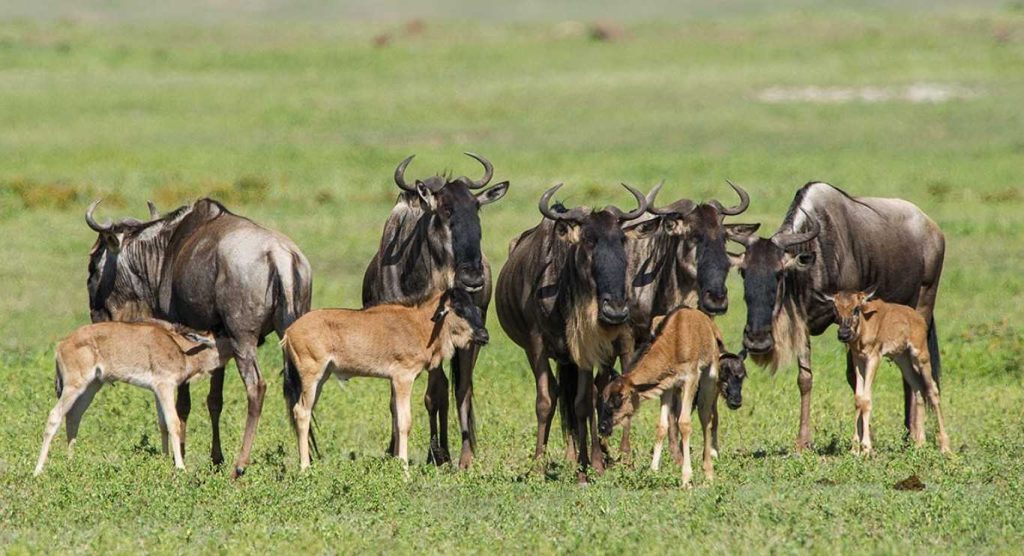
The herds move in a year-round loop between Tanzania’s Serengeti and Kenya’s Masai Mara. Calving takes place in the southern Serengeti from roughly January to March. The herds are usually in the northern Serengeti and the Masai Mara from about July to October, when the famous Mara River crossings happen. Crossings depend on rain and the animals’ own timing, so no date is ever guaranteed. Our Great Migration 2027 guide explains the odds honestly.
Best Time to Visit East Africa for Gorilla Trekking
Treks run every day of the year in Rwanda and Uganda, but the drier months of June to September and December to February make the steep forest trails easier. Permits for those months sell out first. Read our gorilla trekking permits guide before you choose dates, and our Rwanda gorilla trekking guide for the trek itself.
Best Time to Visit East Africa for a Beach Finish
Zanzibar and the Kenyan coast are at their best from late June to October and from December to February, when the sea is calmer and skies are clearer. April and May bring the heaviest coastal rain, and some beach hotels close for a few weeks. Our Zanzibar travel guide covers the island in more depth.
Best Time to Visit East Africa for Birdwatching
Birding is good all year, but November to April is outstanding. Migrant birds arrive from Europe and Asia, and many resident species put on breeding plumage. The green season also brings dramatic skies and fresh grass, which photographers love.
Best Time to Visit East Africa With Children
For families tied to school holidays, July–August and the Christmas break both fall in dry seasons, which is good news. Book these dates early, especially family rooms. Easter often falls in the long rains, so consider shorter road transfers and a beach-heavy plan at that time.
Best Time to Visit East Africa on a Budget
If price matters most, travel in the green season: April, May, early June and November. Many lodges lower their rates, parks are quieter and the landscapes are lush. The trade-off is rain, usually in afternoon storms rather than all-day downpours, and some muddier roads.

Best Time to Visit East Africa by Country
Kenya
Kenya’s main safari season runs from late June to October, with a second excellent spell from late December to February. Amboseli, Samburu and Tsavo are good in most months, while the Masai Mara is busiest during the migration. The official Magical Kenya tourism site has a useful overview, and our Kenya safari in January and Kenya safari in December guides go deeper into those months.
Tanzania
Northern Tanzania follows a similar pattern. Choose January to March for calving in the southern Serengeti, and June to October for the central and northern Serengeti, Tarangire and the Ngorongoro Crater. Kilimanjaro is most often climbed in the drier months of January to March and June to October.
Rwanda and Uganda
For primates, the best time to visit East Africa’s forests follows the dry seasons. Both countries can be visited all year, but June to September and December to February are the most comfortable for gorilla and chimpanzee trekking. Rain in the highlands can arrive at any time, so always pack a waterproof jacket.
Sample Routes for Each Season
Once you know the best time to visit East Africa for your own priorities, the route almost plans itself. These are the combinations we suggest most often:
- January–February: Masai Mara or Amboseli in Kenya, then the southern Serengeti for calving, finishing on Zanzibar’s beaches.
- June: a quieter Masai Mara before the peak, the central Serengeti or Tarangire, and a gorilla trek in Rwanda while trails are dry.
- July–September: the Masai Mara for river crossings, combined with gorillas in Rwanda or Uganda — the classic East Africa circuit.
- October: the Mara as the herds begin to drift south, then a beach week on the Kenyan coast or Zanzibar while the sea is calm.
- November: Amboseli, Tsavo and Samburu, which cope well with short rains, plus good-value coastal hotels.
- December: a festive safari in the Mara or Amboseli followed by Diani or Zanzibar for the holidays.
What to Pack for Each Season
Whatever the best time to visit East Africa turns out to be for you, pack layers. Early-morning game drives are chilly at altitude, especially from June to August, while midday can be hot. A warm fleece, a light waterproof jacket, neutral-coloured clothing and a sun hat cover almost every month.
In the green season, add quick-drying trousers and a small dry bag for your camera. For gorilla trekking, bring waterproof boots with good grip and gardening gloves in any month. Soft-sided luggage is essential if you are taking light-aircraft flights between parks, because baggage limits are strict.
Does the Best Time to Visit East Africa Change Each Year?
The broad pattern stays the same, but the details shift. Rains can start early or late, and the migration herds follow the grass rather than the calendar. That is why we watch conditions closely and keep in touch with guides and camps across the region. When you plan with us, we use the latest reports from the field, not last year’s averages.
Our Verdict
There is no single wrong month for an East Africa safari, only months that suit some plans better than others. If you can travel any time, late June to October and late December to February are the safest choices. If you value space and price over perfect weather, the green season can be wonderful. Tell us your dates and priorities, and we will match them to the right parks.
Prices, Crowds and Booking Lead Times
Price is part of choosing the best time to visit East Africa. Peak months bring the highest lodge rates and the busiest sightings, especially at Mara River crossing points. Shoulder months such as June, early July, October and early December often give the best balance of weather, wildlife and price. For July to September and the Christmas weeks, book four to six months ahead; for the green season, a few weeks’ notice is often enough.
If you want quieter game drives whatever the month, consider a private Kenya safari with your own vehicle and guide, or start with one of our safaris from Nairobi.
Every Month Has a Right Destination. We Know Which One.
Tell Sense of Adventure your travel months and we will build the East Africa circuit that puts you in the right place at the right time — whatever your dates are.
Frequently Asked Questions — Best Time to Visit East Africa
What is the best time to visit East Africa overall?
For most travellers, the best time to visit East Africa is late June to October or late December to February. These dry seasons offer easy game viewing, comfortable gorilla trekking and good beach weather. If you want lower prices and fewer vehicles, the green seasons of April–May and November are worth considering.
Is there a month where I can see both the Great Migration and gorillas?
Yes — July to September. The migration is usually in Kenya’s Masai Mara from July, and the dry season makes gorilla trekking in Rwanda and Uganda most comfortable. A combined circuit in this period delivers both headline experiences in ideal conditions. Book 4–6 months ahead as this is the most popular period.
When should I avoid East Africa for safari?
April and May are the most challenging months: the long rains affect Kenya and Tanzania at the same time, gorilla trails are muddiest and some properties close for maintenance. November’s short rains are lighter and briefer, and most of Kenya and Tanzania remain fully operational, so it is a good-value choice with realistic expectations.
Does rain ruin a safari?
Rain does not ruin a safari — it changes it. Wildlife stays active, predators often hunt after storms and the light after a downpour is superb. What rain affects is comfort and access, as some bush tracks become impassable. Experienced drivers know which routes hold up, and short afternoon showers rarely spoil a full day.
What is the best month for a first-time East Africa safari?
July to October for the migration experience. January to February for the best-value secret season, with excellent conditions, lighter crowds and Zanzibar at its best. December for families travelling in school holidays who want good conditions without July–October prices. Sense of Adventure will give a direct recommendation for your travel window.
How far ahead should I book an East Africa safari?
For July to September and the Christmas period, book four to six months ahead, and earlier if you need gorilla permits or family rooms. For the rest of the year, two to three months is usually enough. Green-season trips can sometimes be arranged at a few weeks’ notice.