Cheetahs in Kenya are easiest to see in one ecosystem above all others: the Masai Mara, where open short-grass plains suit the world’s fastest land animal and researchers monitor the cats individually. The private conservancies bordering the Mara, such as Naboisho, Olare Motorogi, Mara North and Ol Kinyei, often produce the calmest sightings, because they limit how many vehicles can gather at one cat.
Amboseli, Samburu and Laikipia offer smaller, quieter alternatives, with fewer cheetahs but often fewer vehicles competing for the same sighting too. Picture a cheetah coalition, unbothered by a single vehicle, beginning a stalk across open grassland in complete silence. Sense of Adventure builds cheetah-focused trips around exactly this trade-off between numbers and exclusivity.
✅ Cheetahs in Kenya: Quick Answer
- Best overall: the Masai Mara ecosystem, with the most reliable sightings of cheetahs in Kenya.
- Best for quiet sightings: Mara conservancies such as Naboisho, Olare Motorogi, Mara North and Ol Kinyei.
- Best second park: Amboseli, where flat, open plains make cheetahs easy to watch when they are present.
- Northern option: Samburu and Laikipia, with fewer cheetahs but fewer vehicles.
- Best months: the dry seasons, roughly June to October and January to February.
- Best time of day: morning and late afternoon, as cheetahs hunt in daylight.
Dreaming of a cheetah hunt on open grass? We will plan the right plains and the right days.
Plan My Cheetah SafariThe Mara Leads, But Not Always for the Reason You’d Expect
The greater Mara ecosystem holds the strongest population of cheetahs in Kenya, and the Mara Cheetah Project has monitored individual cats there for years. Published counts vary from year to year, so we avoid quoting a single figure. What matters for travellers is that the Mara gives you more chances than anywhere else in the country.
Many of the best sightings happen not in the main reserve itself but in the bordering private conservancies. Conservancy rules limit the number of vehicles at a sighting, so cheetahs can hunt with less pressure and you watch without a crowd.
Samburu’s drier, scrubbier terrain makes cheetahs somewhat harder to spot than in the Mara’s open grassland, though good sightings happen on the more open plains, especially in dry months. Amboseli holds a smaller population, but its flat, sparse terrain means a sighting there can feel wonderfully uncrowded, because most visitors come for the elephants.
The 6 Best Places to See Cheetahs in Kenya
These are the areas where our guides find cheetahs in Kenya most often, in rough order of reliability for a stay of three nights or more.
Masai Mara National Reserve — Kenya’s Cheetah Stronghold — wide plains and plenty of prey
The reserve’s short-grass plains are ideal cheetah country, with gazelles and impala all year and the Great Migration from about July to October. Sightings are frequent, but popular cats can draw several vehicles. Read our Masai Mara cheetah safari guide for the best areas.
Mara Conservancies — Calm, Uncrowded Sightings — vehicle limits and off-road viewing
Naboisho, Olare Motorogi, Mara North and Ol Kinyei limit vehicles at each sighting and usually allow off-road driving and night drives. They often give the calmest, least crowded cheetah sightings. See our Masai Mara conservancies guide and Ol Kinyei Conservancy guide.
Amboseli National Park — Uncrowded by Design — a small population on flat, open plains
Amboseli’s open plains support a small cheetah population that most visitors overlook in favour of the elephants, so a sighting here often comes with few other vehicles around. Read about Amboseli wildlife beyond elephants.
Samburu National Reserve — A Quieter Northern Alternative — best on the open flats
Samburu’s scrubby terrain makes cheetahs harder to spot than in the Mara, but the more open plains produce good sightings, especially in the dry season. It pairs well with the Samburu Special Five. See our Samburu safari planning guide.
Laikipia Conservancies — Plateau Cheetahs — walks, night drives and few vehicles
Laikipia’s private and community conservancies are an underrated place for cheetahs in Kenya, with cats on their open plains, alongside rhinos and wild dogs in some areas. Densities are lower than in the Mara, but you rarely share a sighting.
Tsavo East — Huge Spaces, Low Density — for patient explorers
Tsavo East’s open southern plains hold cheetahs at low density across vast distances. Sightings need luck and patience, but it is an easy add-on from the coast. Read about the big cats of Tsavo.
A bonus option for cheetahs in Kenya: they are occasionally seen in Nairobi National Park, though far less often than its lions and rhinos, so treat one as a lucky extra on a half-day drive.
Cheetahs in Kenya Compared: Area by Area
This table compares your typical odds of seeing cheetahs in Kenya on a stay of three nights, with what each area does best. Odds are our guides’ honest view, not a guarantee.
| Area | Cheetah odds | Crowding | Best for |
|---|---|---|---|
| Masai Mara reserve | High | Can be busy | Hunts on open plains |
| Mara conservancies | High | Low | Calm sightings, off-road viewing |
| Amboseli | Fair | Low for cheetahs | Elephants plus a chance of cheetah |
| Samburu | Fair | Low | Northern species and quiet tracks |
| Laikipia conservancies | Fair | Very low | Walks, night drives, rhinos |
| Tsavo East | Lower | Very low | Coast add-ons |
| Nairobi National Park | Low | Moderate | A lucky bonus |
Reserve or Conservancy: Choosing Your Cheetah Base
The biggest decision for anyone hoping to watch cheetahs in Kenya is where to sleep in the Mara, because it shapes how you see them.
Why conservancies suit cheetahs in Kenya so well
Conservancies limit vehicles at a sighting, allow off-road driving to follow a hunt, and offer night drives and guided walks. Cheetahs there are less likely to be surrounded, which matters because a crowded cheetah may abandon a hunt. Conservancy fees replace reserve fees on the days you stay inside; read conservancy fees in Kenya.
When the main reserve makes sense
The reserve has the widest plains and the main Mara River crossing points in migration season, and it offers camps for every budget. To avoid jams, start early and ask your guide to move on when a sighting gets busy. See is the Masai Mara crowded for practical tips.
Combining both
Many of our guests split their stay: two nights in the reserve for scale and the migration, then two nights in a conservancy for quiet cheetah time. Add Amboseli or Samburu for a second habitat if you have a week or more.
Reserve or Conservancy for Your Cheetahs?
Tell us your budget and how many nights you have in the Mara. We will compare reserve and conservancy camps for cheetah viewing and recommend a split that works.
Best Time to See Cheetahs in Kenya
Cheetahs in Kenya are resident, so you can see them in any month. The season changes how easy they are to find and how busy the parks are.
- June to October: the long dry season and, in the Mara, the Great Migration from about July. Short grass, lots of prey and good visibility, but the busiest and most expensive months.
- January to February: a shorter dry spell with clear visibility, fewer vehicles and good value. Excellent for cheetahs in Kenya.
- March to May: the long rains. Tall grass hides cheetahs and some tracks get muddy, but rates are at their lowest.
- November to mid-December: the short rains, usually brief, with green plains and quieter parks.
Best time of day
Unlike lions and leopards, cheetahs usually hunt in daylight, often in the cooler morning and late afternoon. Midday is a good time to find them resting on a termite mound or in the shade of a lone tree, scanning for prey.
Costs, Packages and How to Get There
What you pay to see cheetahs in Kenya depends on park fees, camps and whether you drive or fly. These are prices already published on our site; your final quote depends on season, group size and accommodation.
- Masai Mara entry: the national reserve is run by Narok County, not KWS. Entry is USD 100 per adult per day in low season and USD 200 in peak season.
- Masai Mara Camping Safari: 4 days with Lake Nakuru from USD 590.
- 3-Day Masai Mara Safari: from USD 650 per adult.
- 2-Day Amboseli Safari: from USD 520.
- Amboseli and Masai Mara Safari: 7 days from USD 1,650 per adult.
- Big Cats Photographic Safari: 6 days in the Mara from USD 2,600.
- Fly-in Masai Mara Luxury Safari: 4 days from USD 3,200.
The Masai Mara is about five to six hours from Nairobi by road, or about an hour by scheduled flight from Wilson Airport. Amboseli is a road trip south-east of Nairobi, close to the Tanzanian border. Browse our Masai Mara safari packages, the Amboseli and Masai Mara safari and our 2-day Amboseli safari.
Before you travel, apply for your Electronic Travel Authorisation on the official Kenya eTA portal.
Planning Around the Dry Season?
Send your preferred dates and we will check which Mara and Amboseli camps can take you, then send a written cheetah safari quote with every fee listed.
Hold My Cheetah DatesKenya Cheetah-Viewing Facts
- Mara monitoring: the Mara Cheetah Project monitors individual cheetahs across the greater Mara ecosystem; counts vary year to year.
- Best conservancy odds: Naboisho, Olare Motorogi, Mara North and Ol Kinyei limit vehicle numbers at sightings.
- Samburu: best cheetah sightings on the more open plains, especially in dry months.
- Amboseli: a small population on flat, open terrain, with little competing attention.
- Best months: June to October and January to February, the two dry seasons.
- Behaviour: cheetahs hunt by day and rely on open sightlines, so flat, grassy terrain is key in any park.
- Speed: the fastest land animal, reaching around 100 km/h in short bursts.
- Status: listed as Vulnerable on the IUCN Red List.
For the cheetah’s conservation status and range, see the IUCN Red List. For national park rules and fees, visit the Kenya Wildlife Service.
Tips for Watching Cheetahs Responsibly
Good behaviour around cheetahs in Kenya protects the cats and gives you better sightings.
- Keep your distance. A cheetah that feels crowded may abandon a hunt or leave cubs exposed.
- Never block the line of a stalk. Ask your guide to position the vehicle to the side, not between the cat and its prey.
- Stay quiet and seated. Do not stand up through the roof hatch suddenly when a cheetah is close.
- Do not climb out to get a photo. In the reserve you must stay in the vehicle.
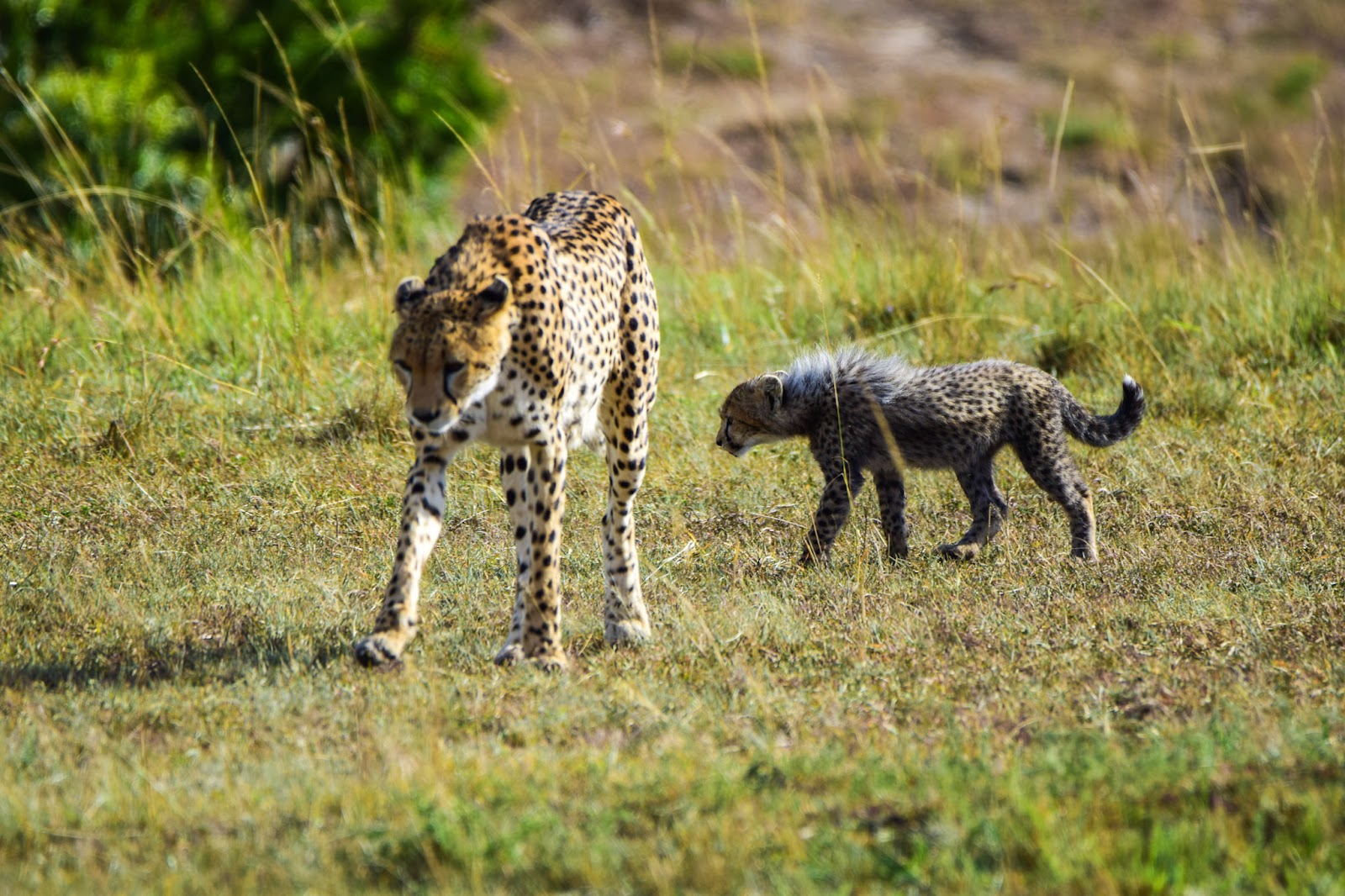
- Respect cubs. Mothers move cubs often; give families extra space.
- Be patient. A cheetah resting on a mound may not hunt for hours, so a full-day drive helps.
Photography tips
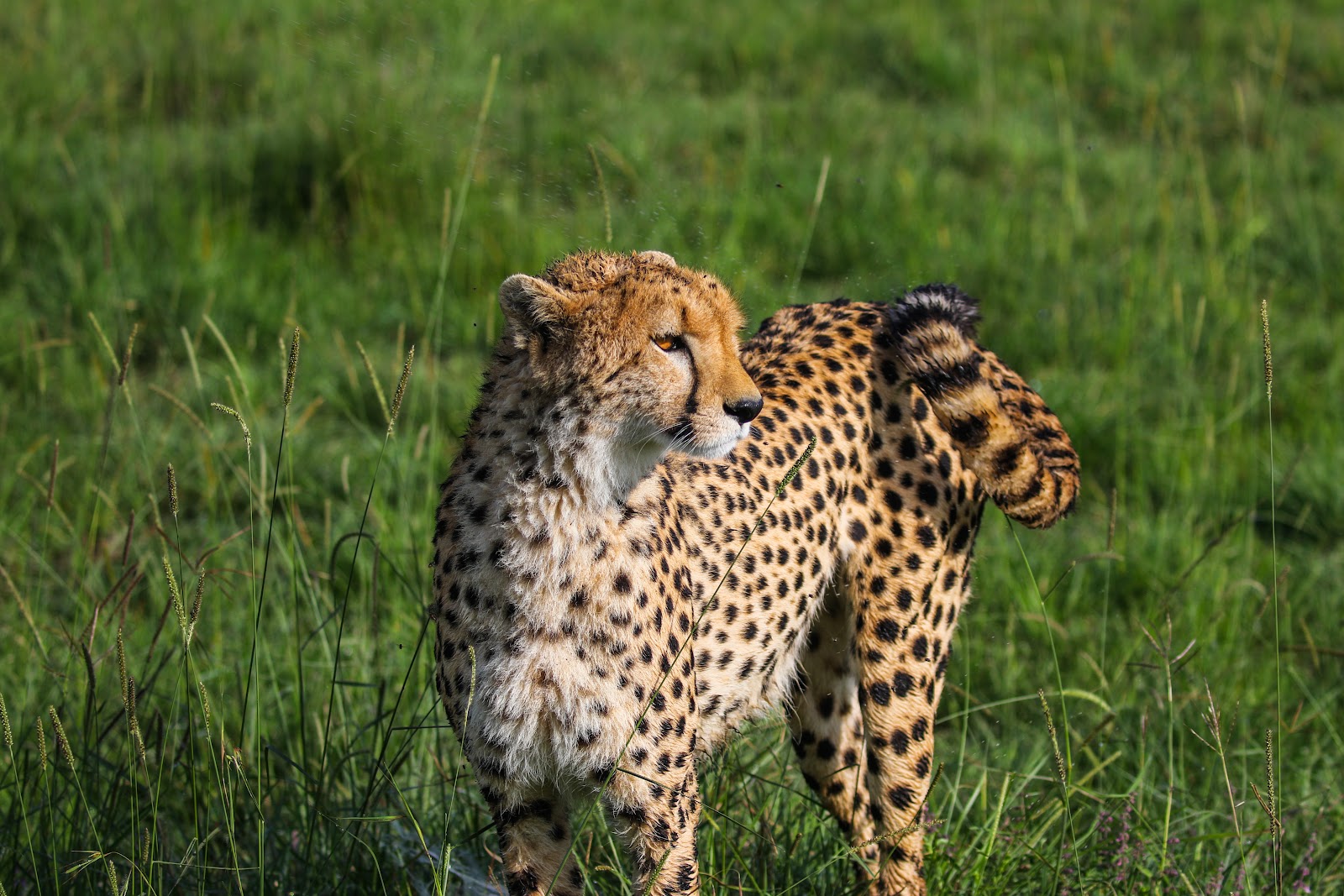
Cheetahs in Kenya look their best on a termite mound in soft morning light. Use a fast shutter speed for running cats, keep the sun behind you in the morning, and focus on the eyes. A private vehicle lets you wait for action rather than leave on a group timetable.
Cheetah or Leopard? How to Tell Them Apart
Many first-time visitors mix up the two spotted cats, so it helps to recognise cheetahs in Kenya at a glance. Your guide will know instantly, but these clues make the moment more rewarding.
Cheetah
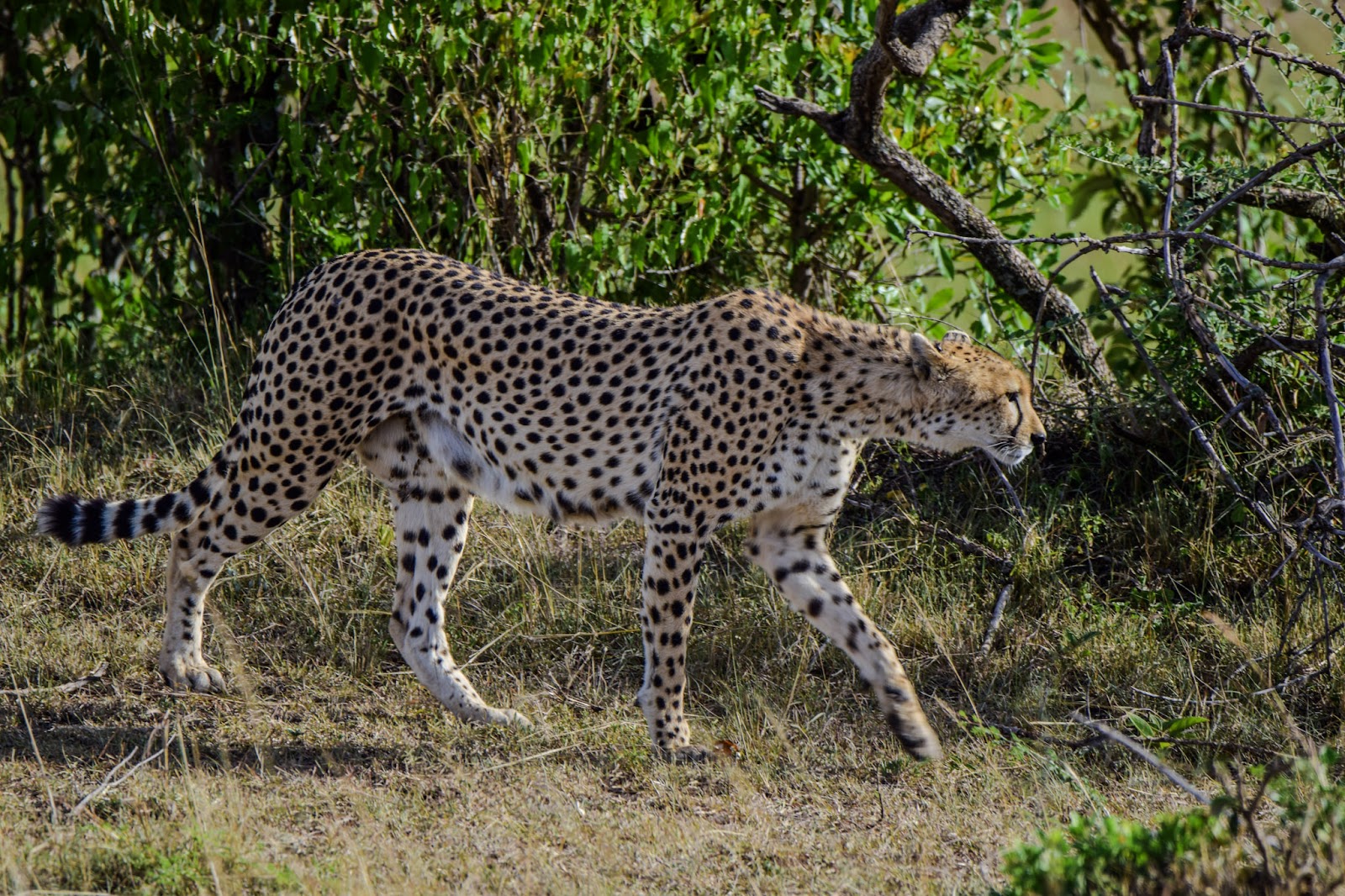
A cheetah is tall, slim and long-legged, with a small round head, a deep chest and a narrow waist. Its coat has solid black spots, and two black ‘tear lines’ run from the inner eyes to the mouth. Cheetahs live on open plains, hunt by day and rarely climb high into trees.
Leopard
A leopard is stockier and more muscular, with a larger head and shorter legs. Its coat is covered in rosettes, rings of spots around a paler centre, and it has no tear lines. Leopards prefer cover, are most active at night and often rest or store kills in trees.
Building a Cheetah-Focused Kenya Safari
Our Masai Mara cheetah safari guide covers famous coalitions such as the Tano Bora and specific conservancy detail. Combine the Mara with Amboseli via our 8-day Kenya safari for both experiences in one trip.
For a vehicle of your own, see our private Kenya safari options, or our luxury Kenya safari itineraries for conservancy camps. If you hope to see all three big cats in Kenya, read our guide to the best parks for leopards in Kenya too.
Speed, Stalks and Open Plains
From the Mara conservancies to Amboseli’s quiet plains, we will build a safari around cheetahs in Kenya, matched to how crowded, or not, you want it.
Frequently Asked Questions
Which Kenyan park has the most cheetahs?
The Masai Mara ecosystem has the strongest population of cheetahs in Kenya, and researchers there monitor the cats individually. The best sightings often come from the private conservancies bordering the main reserve, where vehicle limits mean calmer viewing. Amboseli, Samburu and Laikipia hold smaller populations.
Are the Mara conservancies better than the main reserve for cheetahs?
Often, yes. Conservancies such as Naboisho, Olare Motorogi, Mara North and Ol Kinyei limit the number of vehicles at a sighting and usually allow off-road driving, so cheetahs can hunt with less disturbance. The main reserve still has excellent cheetahs, but popular sightings can get busy.
Can you see cheetahs in Amboseli National Park?
Yes. Amboseli holds a small cheetah population on its flat, open plains. Because most visitors focus on the park’s famous elephants, cheetah sightings here often come with few other vehicles. Sightings are less frequent than in the Mara, so treat Amboseli as a good second chance rather than your main cheetah stop.
Is Samburu good for cheetah sightings?
Yes, though cheetahs are harder to spot in Samburu’s drier, scrubbier terrain than in the Mara’s open grassland. The best sightings come from the more open plains, particularly in the dry season. Samburu is worth it for the Special Five and quiet tracks, with cheetahs as a welcome bonus.
What is the best time of year to see cheetahs in Kenya?
The dry seasons are best for cheetahs in Kenya: June to October, when the Great Migration brings extra prey to the Mara, and January to February, when visibility is clear and parks are quieter. In the long rains of March to May, tall grass makes cheetahs harder to find.
What time of day do cheetahs hunt?
Cheetahs usually hunt in daylight, often in the cooler morning and late afternoon, which avoids competition with lions and hyenas that hunt mainly at night. Around midday they often rest on termite mounds or in shade. Full-day game drives give you the best chance of seeing a chase.
How many days do I need to see cheetahs in Kenya?
Plan at least three nights in the Masai Mara, ideally including time in a conservancy. That gives you several full days on the plains, which is usually enough for a good sighting. Adding Amboseli or Samburu for another two or three nights raises your chances and adds variety.
How can you tell a cheetah from a leopard?
Cheetahs in Kenya are taller and slimmer than leopards, with solid round spots, a small head and black tear lines running from the eyes to the mouth. Leopards are stockier, with rosette patterns and no tear lines. Cheetahs prefer open plains by day, while leopards favour trees, thickets and darkness.