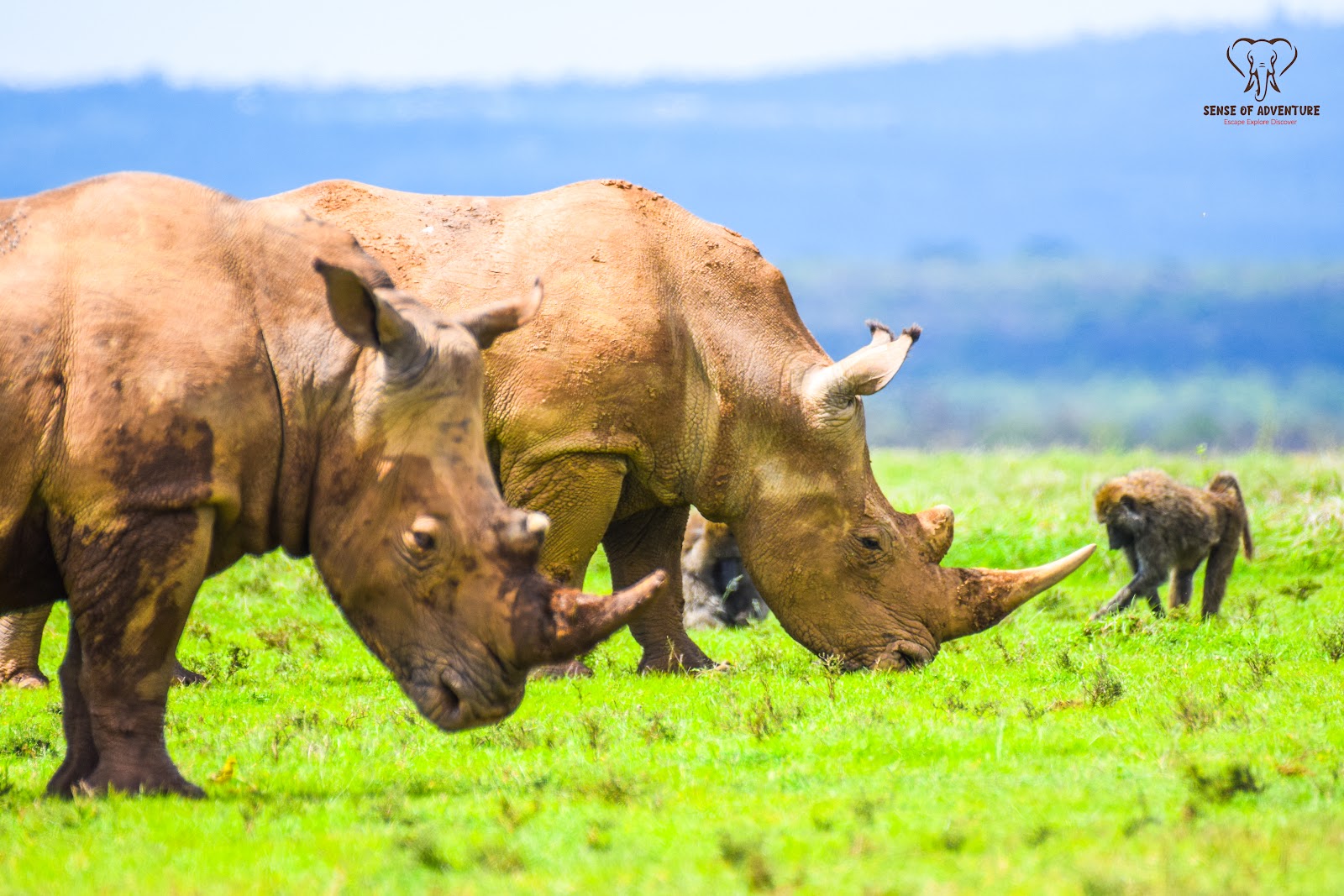
The cold hits you first. It is half past six on the Laikipia plateau, your breath fogs in the open vehicle and Mount Kenya’s jagged peak has just turned from grey to pink. Your guide cuts the engine. Thirty metres away, two white rhinos graze in the dew, tearing grass with a sound like ripping cloth. A calf leans against its mother. Somewhere behind you a lion grunts, low and far away. Nobody speaks. You realise this is exactly why you came.
Ol Pejeta Conservancy is a 90,000-acre (360 km²) non-profit wildlife conservancy in Laikipia County, central Kenya, about 200 km north of Nairobi near Nanyuki. It holds the largest black rhino sanctuary in East Africa, the last two northern white rhinos on Earth, the Big Five and Kenya’s only chimpanzee sanctuary.
Sense of Adventure is a Nairobi-based safari company licensed by Kenya’s Tourism Regulatory Authority (TRA1/47/C01/77087), and we take travellers to Ol Pejeta every week of the year, on day trips and longer Laikipia safaris. This guide covers the conservancy’s history and people, the wildlife and your honest chances of seeing it, the 2026 fees, how to get there, the best months, the activities, rules, where to stay and a sample itinerary. For the bigger picture, see our complete list of Kenya national parks and reserves.
✅ Ol Pejeta Conservancy: The Quick Answer
- Where: Laikipia County, on the equator just west of Nanyuki, between the Aberdare foothills and Mount Kenya.
- Best for: Black and white rhino, the last two northern white rhinos, the Big Five, chimpanzees, night drives and lion tracking.
- Best time: Year-round; June to October and January to March are driest and easiest for game viewing.
- Entry fee: USD 110 per non-resident adult and USD 55 per child (3–11) per day in 2026; KSh 2,000 for East African citizen adults.
- How long to stay: A long day works from Nairobi, but two nights is ideal.
- Getting there: About 3 to 4 hours by road from Nairobi, or a short scheduled flight to Nanyuki.
🌍 Planning a Safari to Ol Pejeta Conservancy?
Tell us your dates and group size, and we will plan a day trip or overnight stay with the right activities booked in advance. 💬 WhatsApp Us Now or call +254 799 160 081
What Is Ol Pejeta Conservancy?
Ol Pejeta Conservancy is a not-for-profit conservancy held in trust for the people of Kenya, where wildlife, cattle ranching and tourism share the same land and fund each other.
It covers 90,000 acres of open plains, acacia woodland and riverine forest along the Ewaso Nyiro River, high on the Laikipia plateau. According to Ol Pejeta Conservancy, it holds the largest single population of eastern black rhino in Kenya, and in 2014 it gained IUCN Green List status, one of only five conservancies in Africa at the time.
From cattle ranch to rhino sanctuary
The land was a cattle ranch for most of the 20th century, bought by Lord Delamere in the 1940s. In 1988 Lonrho Africa set up Sweetwaters Game Reserve next door as a sanctuary for black rhinos during Kenya’s poaching crisis. In 2003 to 2004, Fauna & Flora International and partners acquired the property and turned it into today’s conservancy.
Cattle never left. Ol Pejeta still runs a large herd of Boran cattle, and the herds are moved through the conservancy to keep grass in good condition for wildlife. It is a working example of how livestock and predators can share the same landscape.
The Last Northern White Rhinos: Najin and Fatu
Ol Pejeta Conservancy is home to Najin and Fatu, the last two northern white rhinos on Earth, and a scientific effort to save their subspecies.
Four northern white rhinos arrived from Dvůr Králové Zoo in the Czech Republic on 20 December 2009. The last male, Sudan, died at Ol Pejeta in March 2018, leaving only Najin and her daughter Fatu. Neither can carry a pregnancy, so the subspecies cannot recover naturally. They live under round-the-clock armed protection.
Where the science stands in 2026
An international team called BioRescue collects eggs from Fatu and creates embryos in the laboratory with stored sperm. Najin has been retired from egg collection because of her age. In April 2026 the conservancy reported that 39 pure northern white rhino embryos had been produced, with six embryo transfers into southern white rhino surrogates so far and no lasting pregnancy yet.
Visiting their enclosure with a keeper is a quiet, moving experience rather than a thrill. It is booked as a separate activity, so ask us to include it when you plan your day.
People of Ol Pejeta: Rangers, Keepers and Neighbours
Ol Pejeta Conservancy depends on rangers, keepers, researchers and the farming and pastoralist communities around it, and visitor fees help pay for all of them.
Rangers patrol day and night, supported by tracker dogs, aircraft and drones. Keepers at the northern white rhino enclosure and the chimpanzee sanctuary know each animal individually, and researchers monitor lions and rhinos to manage the population.
Community programmes your fees support
The conservancy’s community development programme focuses on health, education, water, roads, agriculture and livestock extension. Around Nanyuki it supports 16 schools with equipment, five with ICT suites and libraries, and two health centres. To the north, a mobile clinic visits pastoralist communities every two weeks, and bursaries support girls through secondary school.
Because Ol Pejeta is a non-profit, tourism income goes back into conservation and these programmes rather than to private shareholders. Every day ticket you buy is part of that.
Expert tip from our Nairobi team: Add the conservation talk or a behind-the-scenes activity to your day. Hearing a ranger or keeper explain their work gives you a far deeper understanding of how Ol Pejeta keeps its rhinos safe.
Wildlife at Ol Pejeta Conservancy: What You Will See
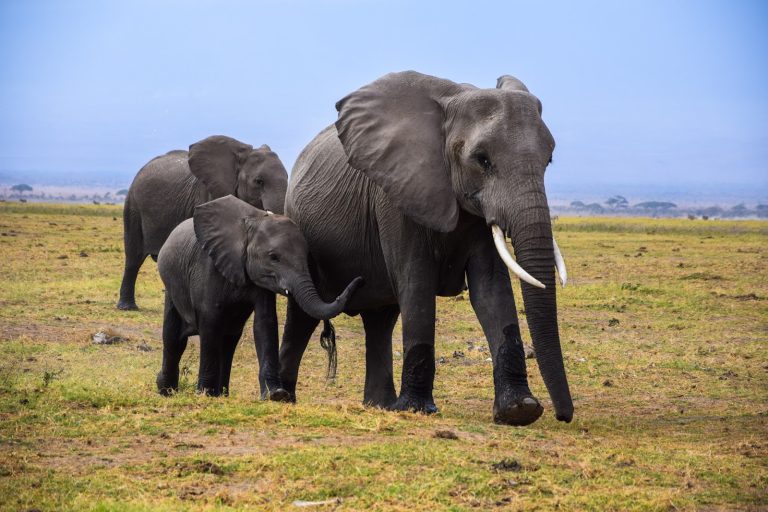
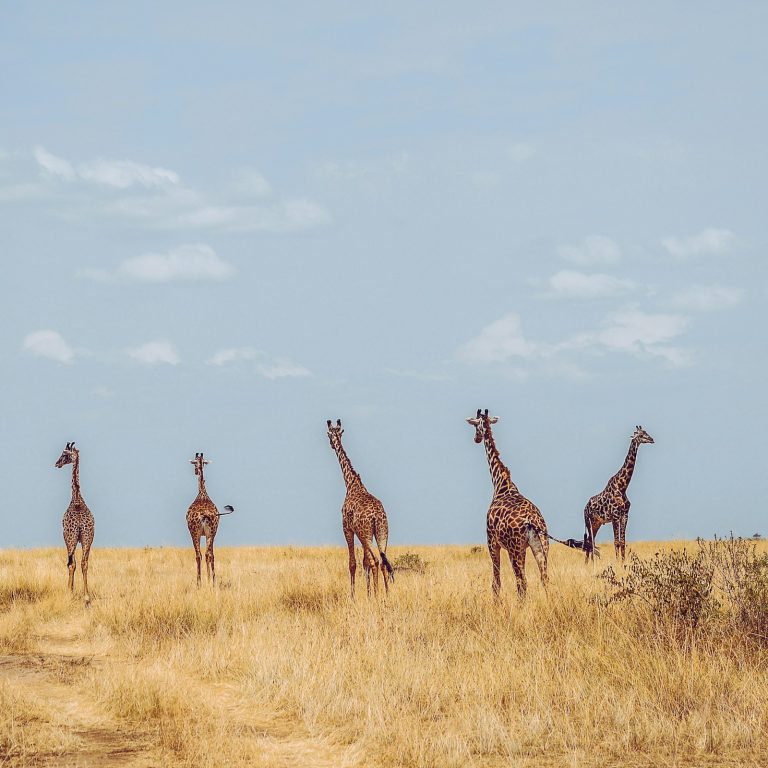
Ol Pejeta Conservancy is one of Kenya’s most reliable places for rhino and the Big Five, with good lion sightings and plenty of plains game against a Mount Kenya backdrop.
The open plains make animals easy to spot. Rhino numbers have grown so well that the conservancy is now near capacity: in 2025, 21 eastern black rhinos were moved from Ol Pejeta to the new Segera Rhino Sanctuary to give them more space.
| Species | Chance on a 2-night stay | Notes |
|---|---|---|
| Southern white rhino | Very high | Grazes in the open; easiest rhino to photograph |
| Black rhino | High | Shy browser in thicker bush; a patient guide helps |
| Northern white rhino | Certain on a booked visit | Najin and Fatu in their protected enclosure |
| Chimpanzee | Certain at the sanctuary | Rescued chimps seen from a raised boardwalk |
| Elephant and buffalo | High | Often near water and along the riverine woodland |
| Lion | Good | Several prides; best early and late in the day |
| Leopard | Low to fair | Secretive; night drives improve the odds |
| Cheetah | Fair | Seen on the open plains, not every day |
| African wild dog | Low | Pass through Laikipia unpredictably; a bonus |
| Grevy’s zebra and Jackson’s hartebeest | Good | Northern specialities among the plains game |
The Sweetwaters Chimpanzee Sanctuary
Chimpanzees are not native to Kenya. The sanctuary was set up in the early 1990s with the Kenya Wildlife Service and the Jane Goodall Institute to give a home to chimps rescued from the illegal wildlife trade in West and Central Africa. You watch them from a raised boardwalk while a keeper tells their stories.
Birds and smaller wildlife
More than 300 bird species have been recorded, from secretary birds and kori bustards on the plains to fish eagles by the river. At night, look for spring hares, bushbabies, aardvark and hyena. Our guide on whether you will see the Big Five in Kenya compares Ol Pejeta with other parks.

Things to Do at Ol Pejeta Conservancy
The best things to do at Ol Pejeta Conservancy are rhino-focused game drives, the northern white rhino visit, the chimpanzee sanctuary, lion tracking, night drives and guided walks.
Game drives
Day visitors can drive the conservancy’s road network in their own or a guide’s vehicle between 7am and 7pm. To protect wildlife, a maximum of six vehicles may stay at a sighting, each for up to ten minutes.
Lion tracking and night drives
As a private conservancy, Ol Pejeta offers activities national parks do not. Lion tracking uses radio telemetry to find collared prides, and night drives use a spotlight to find nocturnal animals. Both run in shared vehicles and need at least four people. Read our night drive guide for what to expect.
Walks, dog tracking and behind the scenes
Guided bush and bird walks, a demonstration with the tracker dog unit and behind-the-scenes conservation visits are all bookable. Activities should be booked at least a day ahead and depend on weather and animal welfare. If walking appeals, see our walking safari safety guide.
Free extras
The Baraka and Morani Information Centre, open 7:30am to 6pm, and the Nature Trail are free to enter. Most road trips also stop at the equator sign near Nanyuki for a photo.
How to Get to Ol Pejeta Conservancy
You can reach Ol Pejeta Conservancy by a 3 to 4-hour drive from Nairobi or by a short scheduled flight to Nanyuki, followed by a transfer.
By road
The tarmac road runs north through Thika and the central highlands to Nanyuki, crossing the equator. The two main gates are Rongai and Serat. A road trip is the most popular choice, and it lets you combine Ol Pejeta with Lake Nakuru National Park, the Aberdares or Samburu on a circuit. For a one-day visit, read our Ol Pejeta day trip from Nairobi guide.
By air
Scheduled light aircraft fly from Wilson Airport to Nanyuki in under an hour, saving several hours on the road. Your guide meets you for the short drive to the conservancy. Bags are usually limited to about 15 kg in a soft holdall; see our guide to safari luggage weight limits on small aircraft.
Ol Pejeta Conservancy Fees in 2026
Ol Pejeta Conservancy fees are charged per person per day for day visitors and per 24 hours for overnight guests, and the gates are cashless, so tickets must be booked online.
The figures below come from the conservancy’s official 2026 tariff guide, valid from January to December 2026. Rates include VAT but may change without notice, and residents must show proof of residency.
| Visitor category | Adult | Child (3–11) | Student |
|---|---|---|---|
| Non-resident | USD 110 | USD 55 | USD 32 |
| East African resident | KSh 3,500 | KSh 1,750 | KSh 500 |
| East African citizen | KSh 2,000 | KSh 1,000 | KSh 500 |
Optional activities are paid on top. In 2026, the northern white rhino visit, lion tracking, night game drive, guided walk, dog tracking and behind-the-scenes activity are each USD 70 per adult, with child rates of USD 35 where offered. The conservation talk is USD 20. East African citizens also pay a vehicle fee, from KSh 1,000 for a car of up to six seats.
See how this compares with the national parks in our guide to Kenya national parks entrance fees for 2026, and learn why private conservancies charge their own fees in conservancy fees in Kenya explained.
📅 Get a Free, No-Obligation Safari Quote
Send us your dates and we will price your Ol Pejeta visit with entry, activities and transport included, so there are no surprises at the gate. ✉ Send Us Your Dates on WhatsApp
Best Time to Visit Ol Pejeta Conservancy
The best time to visit Ol Pejeta Conservancy is during the dry months from June to October and from January to March, though its permanent water makes it rewarding all year.
On the high plateau, days are warm and nights cold, even in the dry season. The long rains usually fall in April and May and the short rains in November and early December. Our Kenya weather by month guide shows how Laikipia compares with the coast and the Mara.
| Month | Weather | Game viewing | Notes |
|---|---|---|---|
| January–March | Dry and warm, clear Mount Kenya views | Very good | Great for photography |
| April–May | Long rains, green and quiet | Good | Lower lodge rates and fewer vehicles |
| June–October | Dry and cool, cold mornings | Excellent | Peak season; pairs well with the Mara migration |
| November–December | Short rains, often afternoon showers | Good | Green scenery and migrant birds |
What to pack for Ol Pejeta Conservancy
- A warm fleece and jacket for early drives; mornings are cold all year
- Neutral-coloured layers for warm middays
- Binoculars for black rhino in thick bush and for birding
- Closed shoes if you plan a walk or dog tracking
- Sunscreen, a hat and sunglasses; the equator sun is strong
- Your booking confirmation, since the gates are cashless
Our Kenya safari packing list covers everything else.
Ol Pejeta Conservancy Rules and Safety
Ol Pejeta Conservancy is very safe for visitors, and its rules keep wildlife calm and sightings fair for everyone.
- Book ahead: tickets are bought online and activities need at least a day’s notice.
- Respect sighting limits: no more than six vehicles at once, for up to ten minutes each.
- Stay in your vehicle except at designated sites or with a ranger.
- Keep to the gate hours of 7am to 7pm unless you are on a guided night drive.
- No feeding wildlife, and keep noise low around rhinos and chimpanzees.
- Drones need permission: read our drone rules guide before you pack one.
Before you travel, check the UK government travel advice for Kenya and the official Kenya Wildlife Service site, and take travel insurance with medical cover.
Expert tip from our Nairobi team: Leave Nairobi before 6am if you are visiting in a day. You will reach the gate as it opens at 7am, beat the traffic and be on the plains while rhinos and lions are still active.
How Many Days Do You Need, and Where to Stay?
Two nights is ideal for Ol Pejeta Conservancy, though a long day trip from Nairobi covers the highlights if time is short.
A day trip is possible but tiring, with six to eight hours on the road. One night lets you add a night drive or lion tracking; two nights gives time for everything at a relaxed pace. Our how many days for a Kenya safari guide helps you plan a longer route.
Where to stay at Ol Pejeta
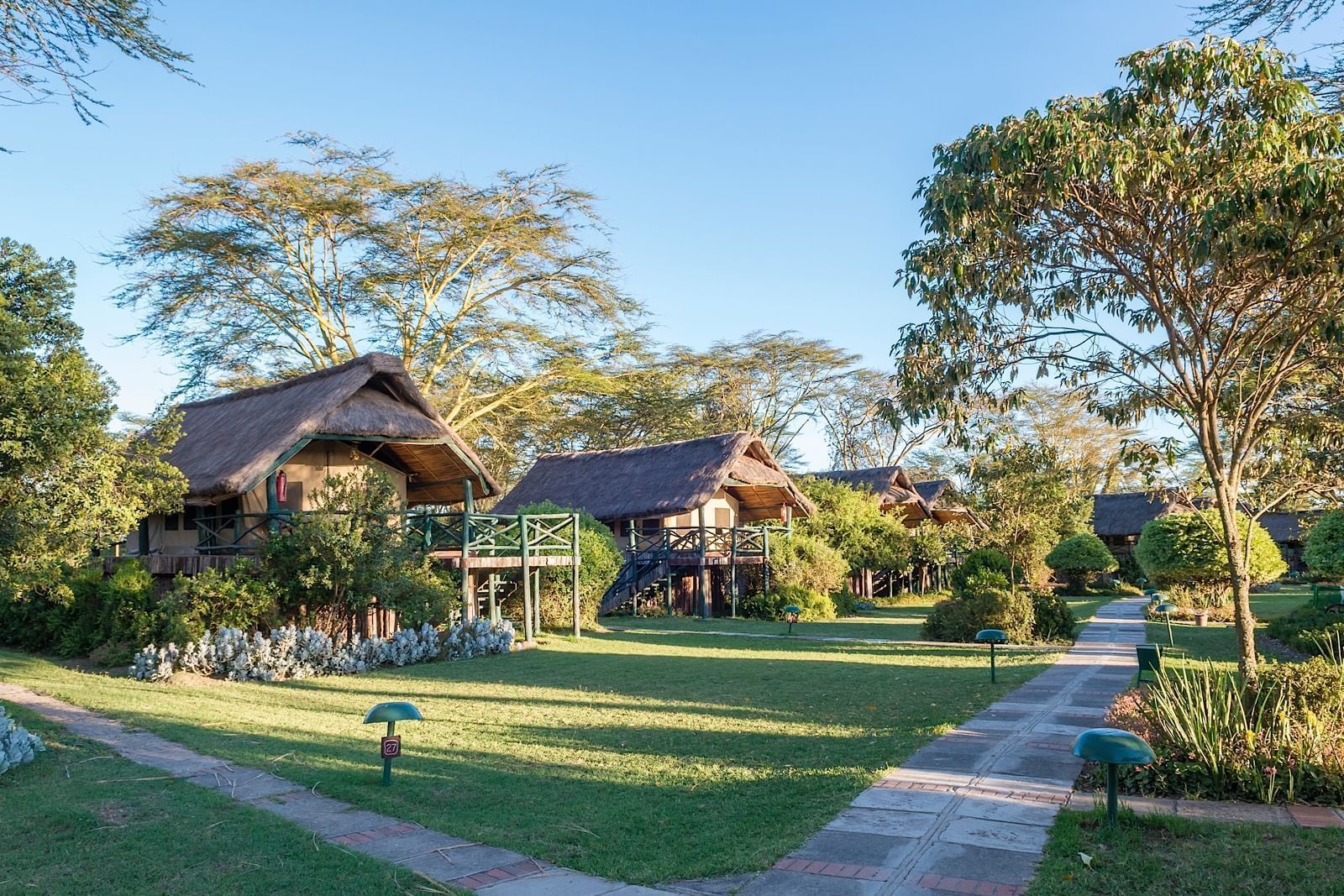
Ol Pejeta Conservancy has a range of camps and lodges, from family-friendly tented camps to small, exclusive camps in quieter corners. Sweetwaters Serena Camp, beside a floodlit waterhole near the chimpanzee sanctuary, is one of the most popular. Staying inside the conservancy is what unlocks night drives and the best early light.
For a tailor-made trip with your own vehicle and guide, see our private Kenya safari options, or our luxury Kenya safari page for the top camps.
Combining Ol Pejeta Conservancy With Nearby Parks
Ol Pejeta Conservancy fits neatly into a central Kenya circuit with Laikipia, Samburu, Lake Nakuru and the Masai Mara.
Head north to Samburu National Reserve for dry-country species, or stay in Laikipia with our guides to Lewa Wildlife Conservancy, Borana Conservancy and Solio. Our Ol Pejeta vs Lewa comparison helps you choose between Kenya’s two most famous rhino conservancies. Many travellers then head south to the Masai Mara.
Sample 2-Day Ol Pejeta Conservancy Itinerary
This plan from Nairobi gives you every highlight without rushing, and it extends easily into a longer safari.
Day 1: Nairobi to Ol Pejeta
Leave Nairobi early and drive north, stopping at the equator in Nanyuki. Enter by mid-morning for a game drive, visit the chimpanzee sanctuary after lunch, then check in to camp. After dinner, join a night drive.
Day 2: Rhinos, lions and the road home
Start at dawn with lion tracking or a game drive for black rhino. Mid-morning, visit Najin and Fatu with their keeper. After lunch, drive back to Nairobi or continue to Samburu or Lake Nakuru.
Short on time? Our Ol Pejeta Day Safari from Nairobi starts from USD 380 per adult sharing. For longer trips, see the Ol Pejeta and Masai Mara Luxury Conservancy Safari or our Kenya Highlights Safari; message us for a quote.
Ol Pejeta Conservancy FAQs
How much is the entry fee for Ol Pejeta Conservancy in 2026?
In 2026 the daily fee is USD 110 for non-resident adults, USD 55 for children aged 3 to 11 and USD 32 for students. East African citizens pay KSh 2,000 per adult and residents KSh 3,500. Gates are cashless, so tickets must be booked online, and activities cost extra.
How far is Ol Pejeta Conservancy from Nairobi?
Ol Pejeta Conservancy is about 200 km north of Nairobi, near Nanyuki. The drive takes around 3 to 4 hours on tarmac roads through the central highlands. Scheduled flights from Wilson Airport to Nanyuki take under an hour, followed by a short transfer to the conservancy.
Can you see the northern white rhinos at Ol Pejeta?
Yes. Najin and Fatu, the last two northern white rhinos on Earth, live in a protected enclosure at Ol Pejeta. Visits with a keeper are booked as a separate activity, priced at USD 70 per adult in 2026, and they depend on the animals’ welfare on the day.
Can you visit Ol Pejeta Conservancy in a day from Nairobi?
Yes. Leave Nairobi around 5:30am to reach the gate as it opens at 7am, and you can fit in game drives, the northern white rhinos and the chimpanzee sanctuary before driving back in the evening. It is a long day, so an overnight stay is more relaxed.
Does Ol Pejeta Conservancy have the Big Five?
Yes. Lion, leopard, elephant, buffalo and both black and white rhino all live in Ol Pejeta Conservancy. Rhino, elephant and buffalo are seen on most visits and lions are seen often. Leopard is the hardest, and a night drive gives you the best chance of finding one.
Why are there chimpanzees at Ol Pejeta?
Chimpanzees are not native to Kenya. The Sweetwaters Chimpanzee Sanctuary was set up in the early 1990s with the Kenya Wildlife Service and the Jane Goodall Institute to care for chimps rescued from the illegal wildlife trade in West and Central Africa. It is the only place in Kenya to see them.
Are night game drives allowed at Ol Pejeta?
Yes. Because Ol Pejeta is a private conservancy, guided night drives are allowed. In 2026 they cost USD 70 per adult and USD 35 per child, run in shared vehicles and need a minimum of four people. They are the best way to see nocturnal animals and hunting predators.
What is the best time to visit Ol Pejeta Conservancy?
Ol Pejeta is good all year because it has permanent water. The dry months from June to October and January to March offer the easiest game viewing and clearest Mount Kenya views. April, May and November are greener and quieter, with lower lodge rates.
🏕 Plan Your Ol Pejeta Conservancy Safari With Sense of Adventure
Kenya-based experts. Real local knowledge. Transparent pricing. Whether you have one free day in Nairobi or a week in Laikipia, we will plan the right Ol Pejeta visit for you. 💬 WhatsApp Us — Start Planning Today
Call or WhatsApp: +254 799 160 081 · Email: reservations@senseofadventure.co.ke
Related Safari Guides
- › Ol Pejeta Day Trip from Nairobi
- › Ol Pejeta vs Lewa: Kenya’s Top Rhino Conservancies
- › Lewa Wildlife Conservancy Guide
- › Borana Conservancy Guide
- › Laikipia Plateau Safari Guide
Official travel & park resource: Kenya Wildlife Service ↗ · Conservancy: Ol Pejeta Conservancy ↗ · Tourism: Magical Kenya ↗