
Aberdare National Park is the Kenya nobody expects: moss-hung cloud forest, bamboo tunnels, icy trout streams and moorlands rolling above 3,000 metres — a highland wilderness where elephants materialise from mist and waterfalls drop the height of skyscrapers. An hour’s climb from the equator’s savannah heat, the Aberdares (Nyandarua range) run 160 kilometres along the Rift’s eastern shoulder, catching the rain that feeds half the country’s rivers. This is Kenya’s moody, gothic safari: rare bongo antelope in the thickets, melanistic “black” leopards and servals, giant forest hogs, and history from Mau Mau hideouts to the treetop hotel where a princess became a queen. Sense of Adventure adds it to circuits for exactly that change of key.
Safari Above the Clouds
Waterfalls, bamboo and black leopards — add the Aberdares’ misty highlands to your Kenya circuit.
What the Aberdares Actually Are
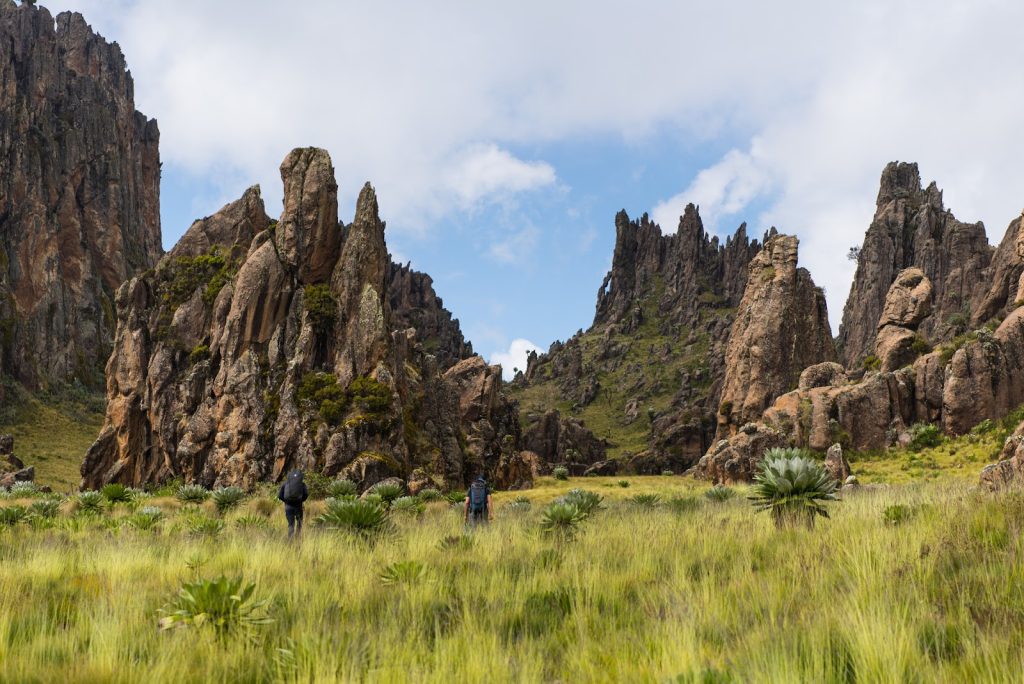
The park protects the upper reaches of the Nyandarua range: a long volcanic massif whose summit moorlands (topping out at Ol Donyo Lesatima, 3,999 m) drop through giant-heather zones and bamboo belts into montane rainforest. Its waters are nationally sacred plumbing — the Tana, Kenya’s largest river, and Nairobi’s own supply rise here. Wildlife adapted to altitude and cover: elephants and buffalo commute the forest roads, the critically endangered mountain bongo survives in the bamboo, and the park is Kenya’s most reliable address for melanistic leopards and servals. Two famous tree lodges — The Ark and Treetops of royal history — stake out floodlit waterholes, while the western Salient and moorland tracks reward self-contained explorers with waterfalls and utter solitude.
We left 30-degree savannah at lunch and were photographing a 300-metre waterfall in fleece jackets by four, elephants appearing out of the fog like ghosts. It felt like a different country — Scotland with buffalo. The Aberdares completely reset our trip.
— Sense of Adventure guest, highland circuit
The 5 Essential Aberdare Experiences
Karuru Falls & the Great Drops — water falling the height of towers
Karuru Falls steps nearly 300 metres into a forested gorge — Kenya’s tallest — with Gura Falls thundering opposite and Chania’s pools close by. Short moorland walks (ranger-escorted) reach the viewpoints. In rain-fed months the spray plumes clear the treetops; photographers should bring something waterproof and something wide.
The Bamboo Belt & Its Ghosts — bongo country
The mid-altitude bamboo forms tunnels a vehicle threads cautiously, home to the mountain bongo — a chestnut-and-white striped forest antelope down to its last wild few, most surviving in these very thickets. Sightings are lottery-grade rare; fresh tracks and the sheer atmosphere of the bamboo are the realistic prize, and they satisfy.
The Floodlit Waterhole Nights — safari from an armchair
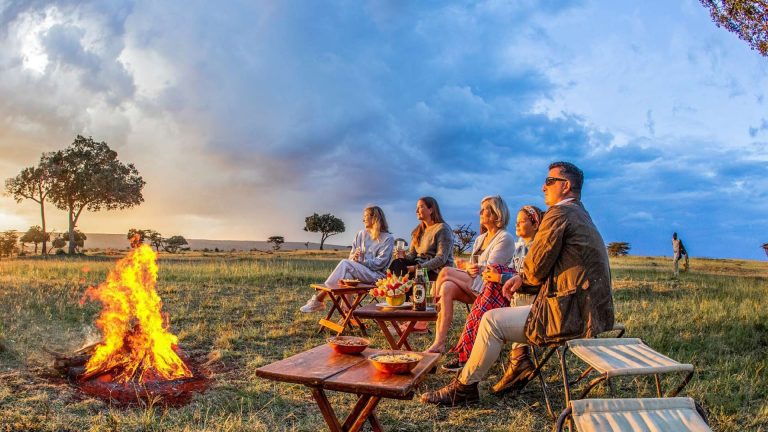
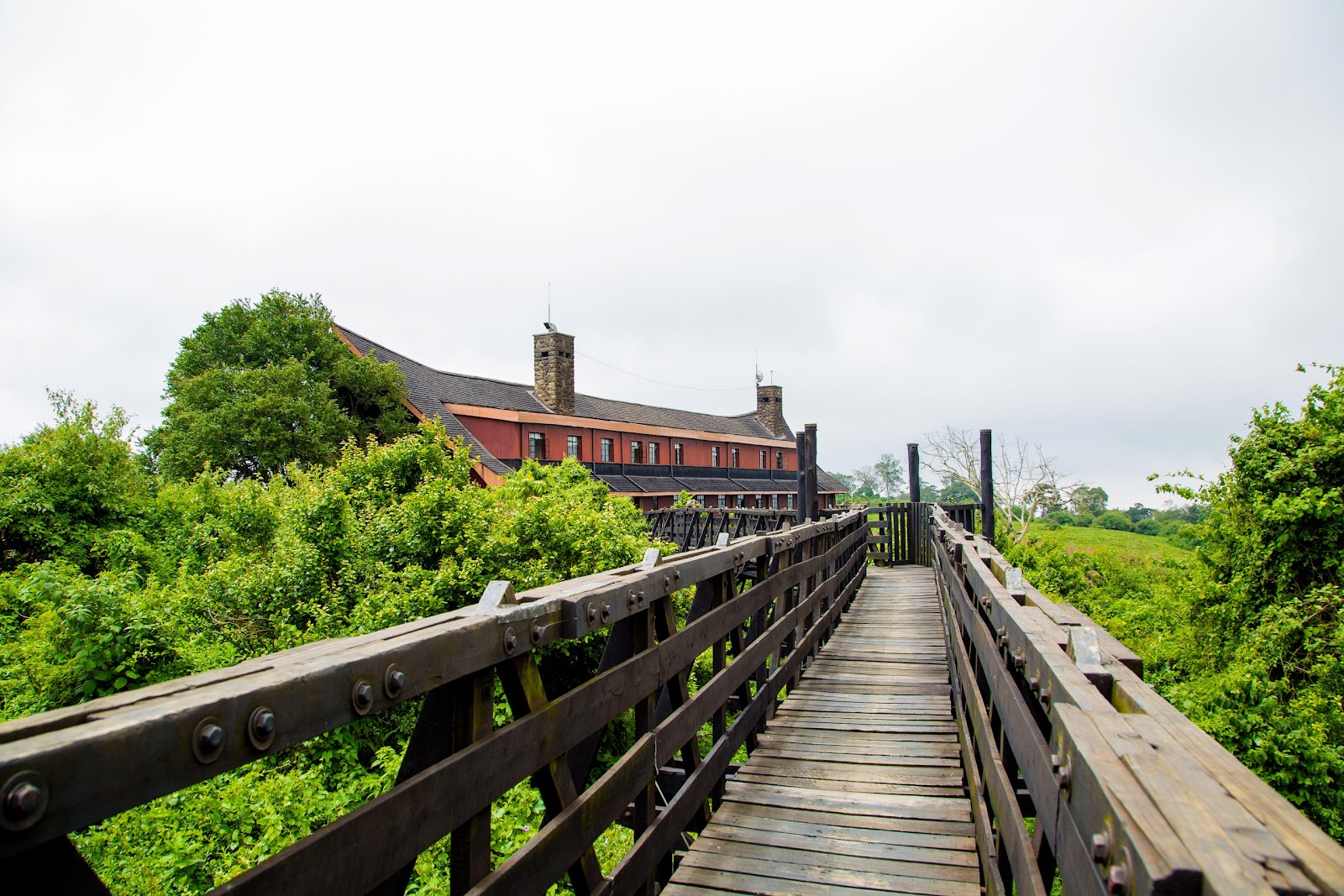
The Ark and Treetops perfected nocturnal spectating: elephants, buffalo, hyenas and genets drifting into floodlight while guests watch from viewing decks with cocoa. Room buzzers announce big arrivals — press for rhino-grade events. It is old-school, faintly theatrical and completely delightful, especially with children.
Melanistic Cats & Highland Rarities — the black leopard beat
High-altitude gene pools make the Aberdares Kenya’s best odds for melanistic leopards and servals — coal-black cats that have made global headlines from these forests. Add giant forest hogs, colobus troops and golden cats of rumour, and every forest drive carries a whisper of jackpot. Dawn and dusk on the Salient roads are the ticket.
Moorland Drives & Trout Streams — the top of Kenya’s water tower
Above the treeline the park opens into tussock and giant lobelia country crossed by icy streams stocked a century ago with brown and rainbow trout — casting a fly at 3,000 metres inside a national park is one of Africa’s stranger pleasures. Views run to Mount Kenya on clear mornings; fog can erase the world by two.
One Night in the Trees
We slot The Ark or Treetops between Samburu and Nakuru legs — the perfect highland pause. Ask how it fits your route.
Aberdare Facts Worth Knowing
- Water tower: the range feeds the Tana river and Nairobi’s reservoirs — Kenya’s most important catchment.
- Altitude spread: the park runs roughly 1,800-4,000 m; pack genuine warm layers whatever the season.
- Royal history: Princess Elizabeth was at Treetops in February 1952 when she became Queen — the lodge rebuilt after Mau Mau-era burning.
- Rarities: mountain bongo, melanistic leopard and serval, giant forest hog — the highland exclusives.
- Access: gates near Nyeri and Naro Moru, ~3 hours from Nairobi; 4×4 essential, fog routine.
- Fishing: moorland streams hold wild-spawning trout; permits arranged with park entry.
Where the Aberdares Fit in a Kenyan Route
The range pairs naturally with the north — our 3-day Aberdare Ranges trek covers the high country on foot, and the park slots between Samburu and Lake Nakuru on classic circuits. Tree-lodge nights are detailed in our Ark & Treetops guide, and Mount Kenya’s forests continue the theme in the Mount Kenya guide.
Kenya Keeps a Cold, Green Secret
Mist, waterfalls and black leopards — two hours from the savannah. Add the Aberdares before everyone else finds them.
Frequently Asked Questions
What is Aberdare National Park known for?
Aberdare National Park is known for Kenya’s tallest waterfalls (Karuru’s ~300 m drops), misty bamboo and cloud forest, moorlands above 3,000 m, rare wildlife like mountain bongo and melanistic leopards, and the famous floodlit tree lodges The Ark and Treetops.
Are there black leopards in the Aberdares?
Yes — the Aberdares are Kenya’s most consistent region for melanistic (black) leopards, whose dark coats suit the high forest’s shade; black servals also occur. Sightings remain rare treasures, best hoped for on dawn and dusk drives along the forested Salient.
What happened at Treetops in the Aberdares?
At Treetops lodge in February 1952, Princess Elizabeth was watching wildlife overnight when her father King George VI died — she famously “went up a tree a princess and came down a queen”. The original lodge was burned during the Mau Mau uprising and rebuilt nearby.
How cold does Aberdare National Park get?
Cold by safari standards — Aberdare National Park spans 1,800 to nearly 4,000 metres, so expect 5-10°C nights, fog and rain possible any month, and frost on the high moorlands. Pack fleece, waterproofs and warm sleepwear even when the lowland parks are baking.
Is the mountain bongo really found in the Aberdares?
Yes — the Aberdares’ bamboo belts shelter one of the last wild populations of the critically endangered mountain bongo, alongside a national breeding-and-rewilding programme on Mount Kenya. Wild sightings are exceptionally rare; tracks and the habitat itself are the realistic encounter.