Kenya safari animal facts are the surprising details that make a game drive come alive. An elephant carries its calf for about 22 months, a cheetah sprints at roughly 100 to 110 km/h, a giraffe strips thorny acacia with a 45 to 50 cm tongue, and the placid-looking hippo is one of Africa’s most dangerous large animals.
Most travel blogs repeat the same few lines: cheetahs are fast, elephants are big, lions live in the Mara. What gets left out is the specific, almost absurd detail that sticks with you long after the drive, such as a giraffe’s dark tongue that may help it cope with hours of sun.
Your guide points at a hippo yawning in the shallows and quietly mentions it is one of the most dangerous large animals in Africa, and suddenly a routine sighting becomes the story you tell for years. Sense of Adventure is a TRA-licensed safari operator and DMC based at Mountain Mall on Thika Road, Nairobi, and our guides build every private safari around details like these, because a fact like that is what turns a photo into a memory. This guide gathers the Kenya safari animal facts our guides share most, then shows where and when to see each animal for yourself.
✅ Kenya Safari Animal Facts: Quick Answer
- Fastest: the cheetah, at roughly 100 to 110 km/h over a short sprint.
- Heaviest: the African elephant; big bulls reach around 6 tonnes.
- Tallest: the giraffe, with males standing over 5 metres.
- Longest pregnancy: about 22 months for an elephant calf.
- Most underestimated: the hippo, which is fast and fiercely territorial around water.
- Rarest big mammal: the northern white rhino; the last northern white rhinos live under 24-hour guard at Ol Pejeta Conservancy.
- Best all-round park: the Masai Mara, with Amboseli for elephants and Samburu for northern species.
Got one animal you would love to see more than any other? Tell us which, and we will plan the parks around it.
Name My Dream SightingWhy Kenya Safari Animal Facts Matter More Than You Think
The numbers behind Kenya safari animal facts are not just trivia; they explain behaviour you will actually watch happen in front of you. Lion prides hold territories that press up against each other, which is why you sometimes find two groups squaring off near a kill. A hippo that looks slow and comical can outrun a person over a short distance, which is exactly why guides treat it with more caution than a resting lion.
Knowing the fact ahead of time changes how you read the moment when it happens. You notice the lioness edging downwind, the elephant matriarch turning her herd, the cheetah climbing a termite mound to scan the plains. Good Kenya safari animal facts turn waiting time into watching time, and they make the questions you ask your guide far more interesting.
6 Kenya Safari Animal Facts Worth Knowing Before You Go
Lions: the lionesses do most of the hunting
In a typical pride, related females do most of the hunting and raise the cubs together, while the males defend the territory. Pride territories vary hugely in size depending on how much prey is around, and a lion’s roar can carry for several kilometres on a still night. Lions also rest for most of the day, often 18 hours or more, which is why early morning drives are the best time to catch them moving.
Elephants: a 22-month pregnancy and a matriarch-led herd
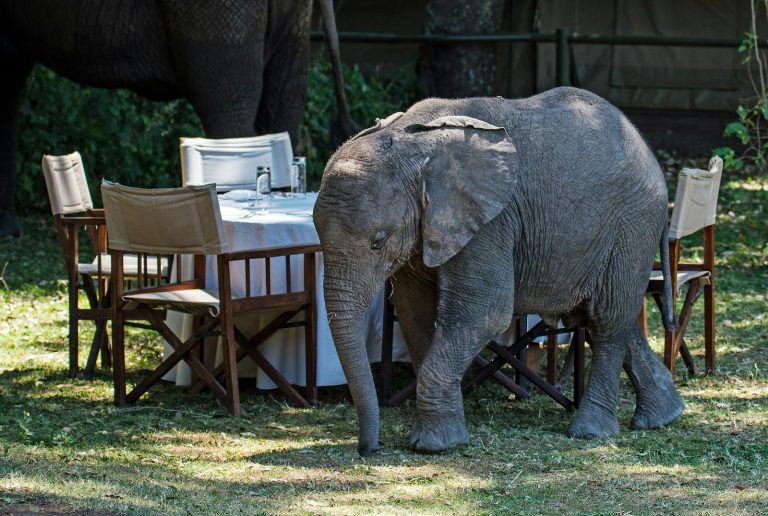
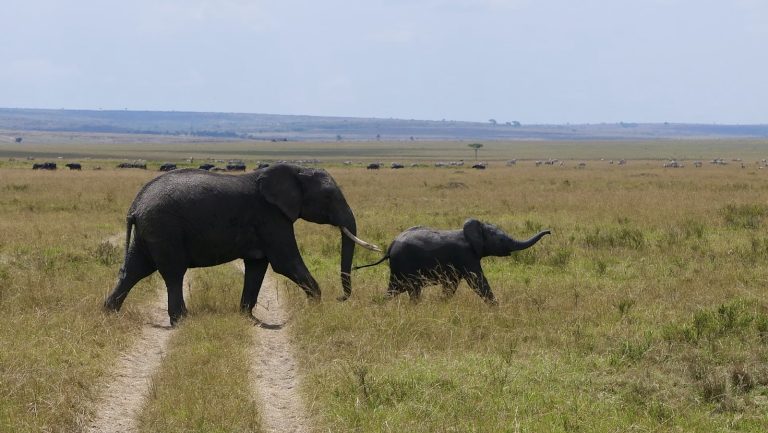
African elephants carry their young for about 22 months, the longest gestation of any land mammal, and live in family herds led by the oldest female rather than a dominant male. Amboseli’s swamp-fed population is one of the most studied in Africa and still includes some impressive big-tusked bulls, which is why our Amboseli Elephant Photographic Safari is built around this park.
Giraffes: a tongue of around 45 to 50 cm
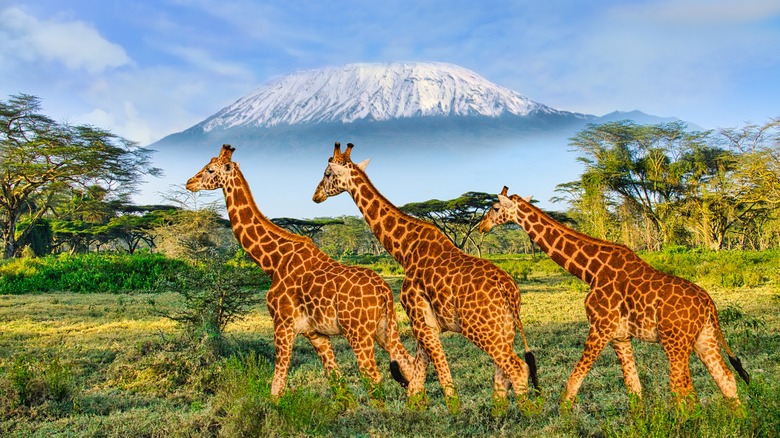
A giraffe’s tongue can stretch to around 45 to 50 centimetres and wraps around thorny acacia twigs to strip the leaves. Its dark blue-black colour is widely thought to help protect it from sunburn during long hours of browsing, though scientists still debate the reason. Their necks contain the same seven vertebrae found in almost every mammal, including humans, each one simply much longer.
Hippos: heavier than a small car, and far more dangerous than they look
A large bull hippo can weigh around 1,500 kilograms or more and spends most daylight hours in water to keep its sensitive skin cool, coming out at night to graze. Its skin produces a reddish secretion, often called “blood sweat”, that acts like a natural sunscreen. Guides across Kenya treat hippos with real caution, because a startled hippo is fast and fiercely protective of its stretch of water.
Cheetahs: built for a sprint, not a chase
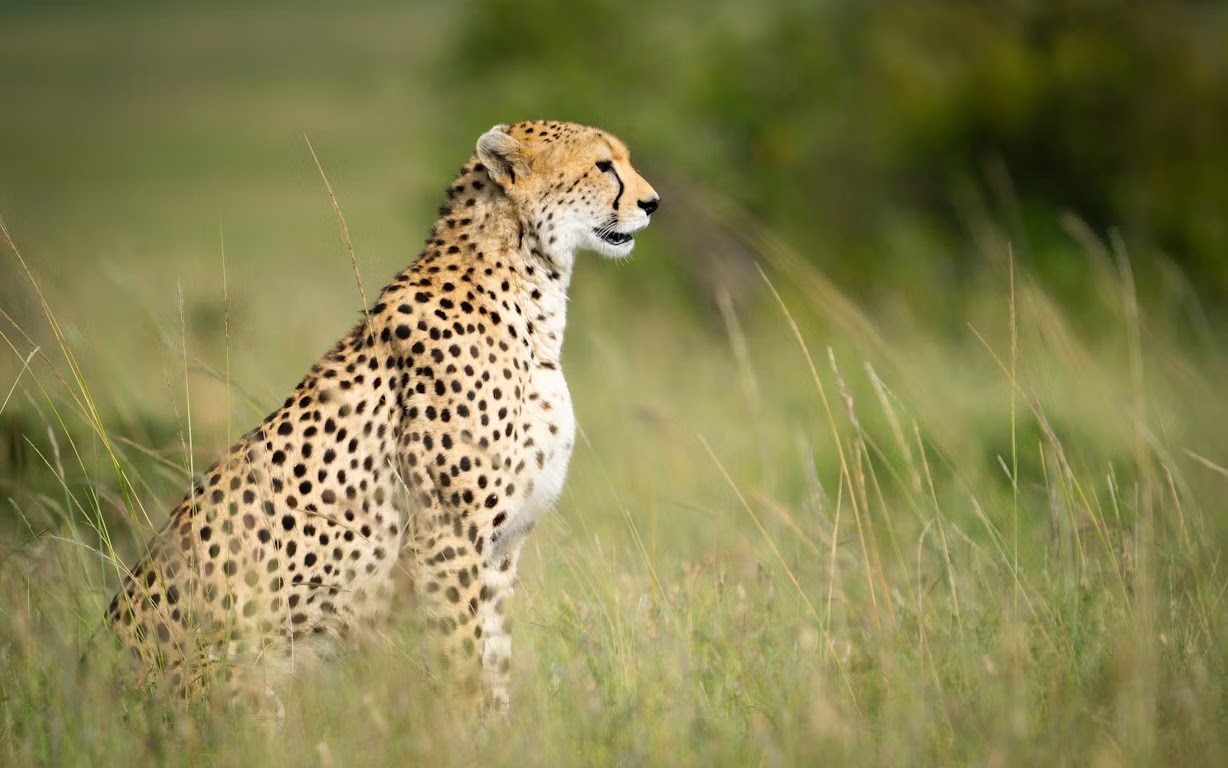
Cheetahs can reach roughly 100 to 110 km/h, but only over a few hundred metres before they must stop and recover, so a failed sprint usually means the hunt is over. They cannot roar; instead they chirp, purr and yelp. The Masai Mara is one of the best places in Africa to see them, and long-running research projects there follow individual cats through their lives.
Nile crocodiles: the patient force behind the Mara River drama
Large Nile crocodiles in the Mara River can reach around 5 metres, and their bite is among the strongest measured in any animal, enough to hold a wildebeest during the river crossings the Great Migration is famous for. Because they are cold-blooded and use little energy, big crocodiles can go many months between large meals, which is why they can wait so patiently.
Turn These Facts Into Your Own Sightings
Tell us which of these six animals matter most to you and we will match them to the right parks, camps and season.
Match Animals to ParksMore Kenya Safari Animal Facts About the Big Five
Most Kenya safari animal facts start with the Big Five. The term “Big Five” comes from old hunting days, when lion, leopard, elephant, rhino and buffalo were considered the most dangerous animals to track on foot. Today the list is simply a checklist for photographers, and our guide to why it is called the Big Five tells the full story. Here are the Kenya safari animal facts that round out the set.
Leopard facts
Among Kenya safari animal facts, the leopard’s are some of the most impressive. Leopards are the most widespread big cat in Africa, yet the hardest of the five to find, because they are solitary and mostly active at dusk and night. A leopard can haul a carcass heavier than itself up a tree to keep it away from lions and hyenas. Each cat’s rosette pattern is unique, which helps researchers and guides recognise individuals.
Rhino facts
Rhinos produce some of the most important Kenya safari animal facts, because both species need constant protection. Kenya has both black and white rhinos. The black rhino is a browser with a pointed, hooked upper lip for plucking leaves, while the white rhino is a grazer with a wide, square lip for cropping grass. Neither is actually black or white. Ol Pejeta Conservancy cares for the last northern white rhinos, a subspecies now kept alive only by round-the-clock protection and an international assisted-reproduction programme, and our black rhino vs white rhino guide explains how to tell the species apart. For current conservation status, the IUCN Red List is the standard reference.
Buffalo facts
Buffalo complete the Big Five’s Kenya safari animal facts. The Cape buffalo has never been domesticated and is famously unpredictable, especially old bulls living alone or in small bachelor groups, which guides nickname “dagga boys”. Herds can number in the hundreds and will gang up to drive off lions. Buffalo are seen in most major Kenyan parks, from the Mara to Aberdare and Lake Nakuru.
Kenya safari animal facts at a glance: the Big Five
| Animal | Stand-out fact | Good place to look |
|---|---|---|
| Lion | Females do most of the hunting | Masai Mara |
| Leopard | Stores kills in trees | Masai Mara, Samburu |
| Elephant | 22-month pregnancy | Amboseli, Tsavo |
| Rhino | Two species, told apart by lip shape | Ol Pejeta, Lake Nakuru |
| Buffalo | Never domesticated | Most major parks |

Beyond the Big Five: Kenya Safari Animal Facts About Everyday Sightings
Some of the best Kenya safari animal facts belong to animals you will see every single day. These are the Kenya safari animal facts guests keep asking about long after the trip.
Zebra facts
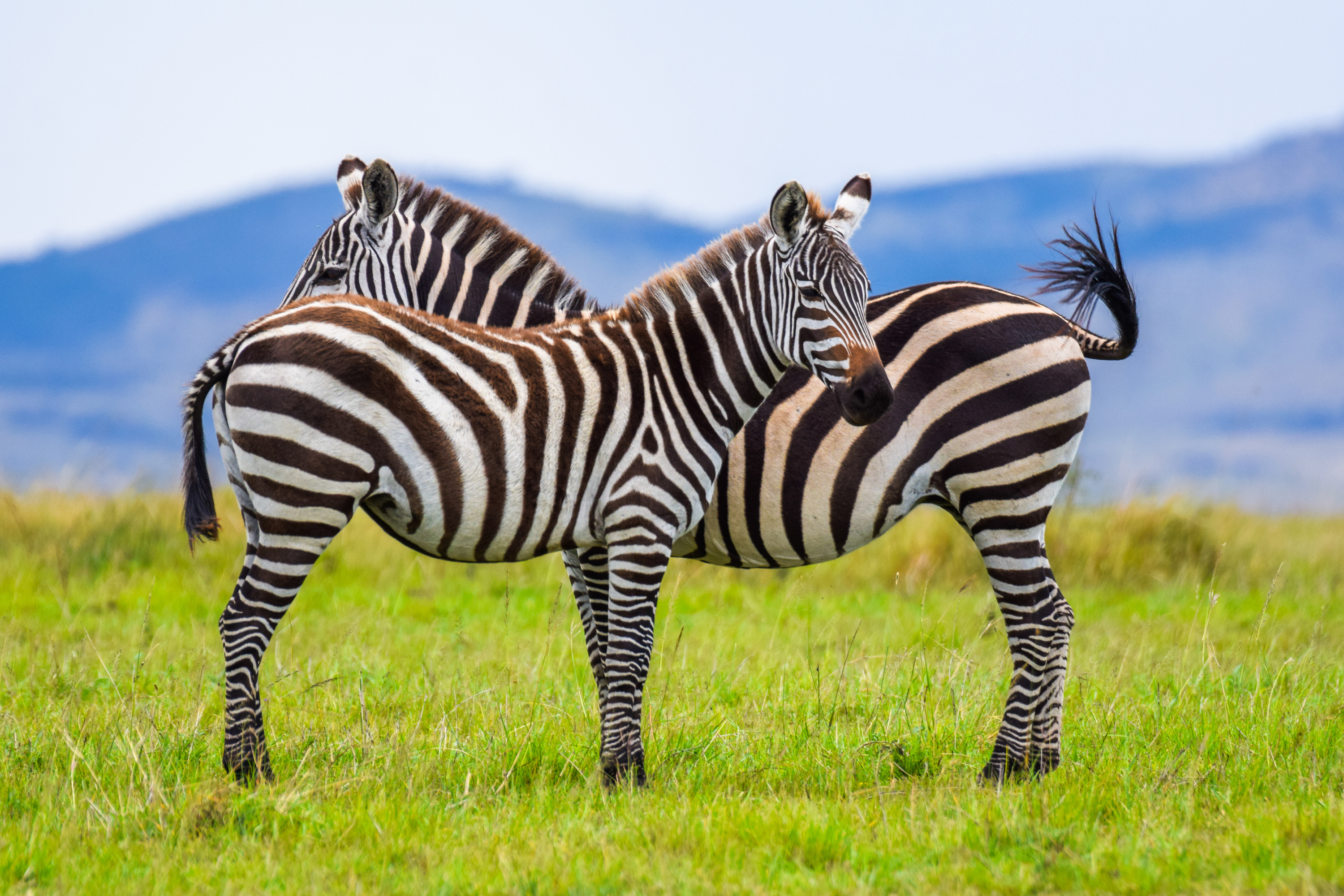
Zebras feature in plenty of Kenya safari animal facts. No two zebras share the same stripe pattern. The leading theory for why they have stripes at all is that the pattern confuses biting flies, as explained in our zebra stripes guide. Kenya has two species: the common plains zebra and the larger, endangered Grévy’s zebra, with narrow stripes and round ears, found mainly in the north around Samburu and Laikipia.
Wildebeest facts
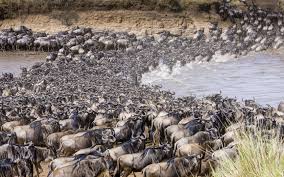
The best-known Kenya safari animal facts belong to the wildebeest. Each year well over a million wildebeest, with hundreds of thousands of zebras and gazelles, move in a loop between Tanzania’s Serengeti and Kenya’s Masai Mara, following the rains and fresh grass. Most herds are in the Mara roughly from July to October, though timing shifts every year. Wildebeest calves can stand within minutes of birth, a vital trick when predators are always close.
Giraffe species facts
Some Kenya safari animal facts are unique to this country. Kenya is unusual because you can see three different giraffe types in one trip: the Maasai giraffe with jagged, leaf-like patches in the south, the reticulated giraffe with neat, net-like patterns in Samburu, and the Rothschild’s giraffe with pale lower legs at Lake Nakuru. Male giraffes “neck” each other, swinging their heads like hammers to settle disputes.
Hippo and crocodile facts
River life adds its own Kenya safari animal facts. Hippos cannot really swim; they push off the bottom and bound through the water. They can stay under for several minutes and even sleep submerged, surfacing to breathe without waking. Our hippo behaviour guide and Nile crocodile behaviour guide go deeper into life along Kenya’s rivers.

Small-animal facts guests love
Not all Kenya safari animal facts are about big animals. These smaller species often steal the show:
- Dik-dik: one of Africa’s smallest antelopes, living in faithful pairs; see our dik-dik facts.
- Gerenuk: an antelope that stands on its hind legs to reach leaves.
- Honey badger: small, tough and famously fearless.
- Ostrich: the largest living bird, and the fastest on land; the Somali ostrich of the north has blue-grey skin.
- Flamingos: Kenya’s lesser flamingos turn pink from carotenoid pigments in the cyanobacteria (spirulina) they filter from soda lakes; see why flamingos are pink.
Kenya Safari Animal Facts: Quick Reference
- Fastest: the cheetah, reaching roughly 100 to 110 km/h over a short sprint.
- Heaviest: the bull African elephant, up to around 6 tonnes, the world’s largest land animal.
- Longest tongue: the giraffe, at around 45 to 50 cm and dark in colour.
- Longest pregnancy: about 22 months for an elephant calf, the longest of any land mammal.
- Most underestimated danger: the hippo, weighing around 1,500 kg and far quicker than its lazy daytime pose suggests.
- Strongest bite: the Nile crocodile, capable of holding large prey during Mara River crossings.
Where to See These Animals on a Kenya Safari
Every animal in these Kenya safari animal facts has a park where it is easiest to see, and most Kenya itineraries combine two or three of them. Our Big Five Kenya guide and our African elephant safari guide go deeper into exactly where and when each species is most active. If it is the Great Migration’s river crossings and crocodile action you want, our Great Migration Photographic Safari and our Amboseli Elephant Photographic Safari are both built specifically around these encounters.
Park-by-park guide to Kenya safari animal facts
- Masai Mara: lions, cheetahs, leopards, the Great Migration and Mara River crocodiles.
- Amboseli: large elephant herds with Kilimanjaro behind them.
- Samburu: the “Samburu Special Five”: Grévy’s zebra, reticulated giraffe, Somali ostrich, gerenuk and Beisa oryx.
- Ol Pejeta and Lake Nakuru: black and white rhinos, plus Rothschild’s giraffe at Nakuru.
- Tsavo: Kenya’s largest elephant population, often coated in red dust.
- Nairobi National Park: rhinos, lions and giraffes with the city skyline behind.
For more detail by species, see our guides to the best parks for lions, the best parks for cheetahs and the Big Nine of Kenya.
Mara, Amboseli or Samburu? Pick the Right Mix
Share how many days you have and your must-see animals, and we will suggest the park combination that gives you the best odds.
Choose My Park MixBest Time to See Kenya’s Wildlife
Kenya safari animal facts also depend on the calendar. Kenya is a year-round safari destination, but timing changes what you see. The long dry season, roughly late June to October, brings animals to rivers and waterholes and is when the Great Migration is usually in the Masai Mara. January and February are also dry and good for general game viewing, with fewer vehicles.
The rainy months, around April to May and again in November, turn the parks green and bring newborn animals and excellent birding, though some tracks become muddy and a few camps close. Our Kenya weather by month guide breaks this down month by month, so you can match the Kenya safari animal facts you care about to the right season.
Tips for spotting more animals
- Go out early: predators are most active around dawn and dusk.
- Watch the herbivores: alarm calls and staring antelope often point to a hidden cat.
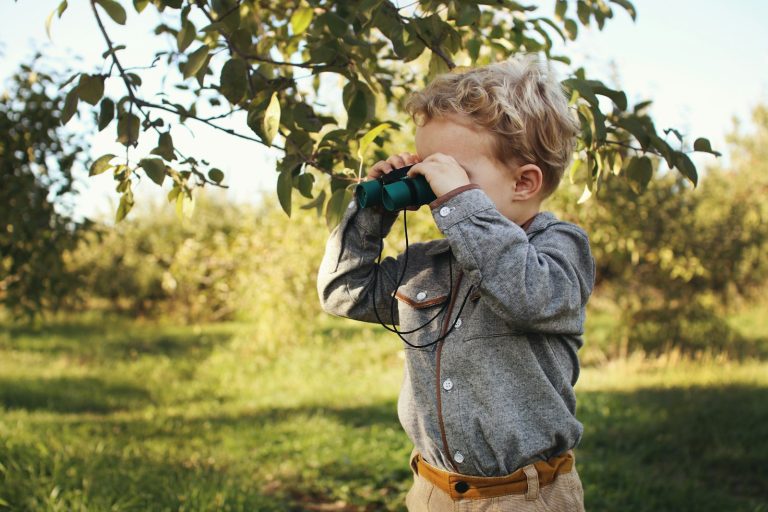
- Bring binoculars: one pair per person makes a real difference.
- Be patient at water: waiting quietly at a river or waterhole often pays off.
- Ask your guide: the best Kenya safari animal facts come from people who drive these parks every week.
- Follow park rules: stay in the vehicle and keep a respectful distance, as set out by the Kenya Wildlife Service.
Expert tip from our Nairobi team
Write down two or three animal facts you want to see for yourself, such as a leopard with a kill in a tree or an elephant family crossing a road, and share them with your guide on the first morning. A private vehicle means the day can be shaped around those moments rather than a fixed group schedule.
What a Wildlife-Focused Kenya Safari Costs
Once the Kenya safari animal facts have you hooked, the next question is cost. Our wildlife-led itineraries give you a clear starting price, with park fees, a private vehicle and an experienced guide included. Current examples on our site include:
- Ol Pejeta Day Safari from Nairobi, from USD 380 per person, for rhinos in a single day.
- Amboseli Elephant Photographic Safari (4 days), from USD 1,800 per person.
- Great Migration Photographic Safari (5 days), from USD 2,400 per person.
- Big Cats Photographic Safari (6 days), from USD 2,600 per person.
Prices depend on dates, group size and lodge choice, so we always confirm a written quote, and your guide’s knowledge comes with every drive. You can also build a private Kenya safari around one animal, or start with a Kenya safari from Nairobi.
These Facts Are Better Experienced Than Read
Send your travel month and group size, and we will reply with a written wildlife safari quote timed for the animals you most want to see.
Kenya Safari Animal Facts FAQs
What is the most surprising Kenya safari animal fact?
For many guests, the most surprising of all Kenya safari animal facts is that the hippo, not the lion, is the animal guides respect most around water. Hippos look placid by day, but they are fast, heavy and fiercely territorial, so vehicles and boats always keep a careful distance from them.
What is the fastest animal you can see on a Kenya safari?
The cheetah is the fastest animal on a Kenya safari, reaching roughly 100 to 110 km/h in a short sprint. It can only hold that pace for a few hundred metres before overheating, so it stalks close to its prey first. The open plains of the Masai Mara are the best place to watch one hunt.
How long is an elephant pregnancy compared to other animals?
An African elephant pregnancy lasts about 22 months, the longest of any land mammal. That is around seven months longer than a giraffe and roughly six times longer than a lion. Calves weigh about 100 kilograms at birth and can usually stand within an hour, staying close to their mother and the wider family herd.
Why do lions live in prides but leopards live alone?
Lions live in prides because hunting together and sharing cub-rearing works well on open plains, where large prey and rival lions are common. Leopards hunt alone, relying on stealth and cover, so a solitary life suits an ambush predator that often lives in thicker bush and along rivers, hiding kills in trees.
Are Nile crocodiles dangerous to tourists on safari?
Nile crocodiles are not a real danger on a standard vehicle-based Kenya safari, because sightings happen from a safe distance at river crossings or waterholes. They are dangerous to wildlife and to anyone entering the water, which is why walks and picnics near rivers always keep a wide, guided berth from the bank.
Where can I see all of these animals in one trip?
A week combining the Masai Mara with Amboseli or Ol Pejeta gives you a strong chance of seeing most animals in these Kenya safari animal facts, including the Big Five. Adding Samburu brings in northern species such as Grevy’s zebra and reticulated giraffe. Sightings are never guaranteed, but good guides greatly improve the odds.
When is the best month for a wildlife safari in Kenya?
For overall game viewing, the dry months from late June to October are the most popular, and they usually coincide with the Great Migration in the Masai Mara. January and February are also excellent and quieter. The green seasons bring baby animals, lush scenery and lower lodge rates, with some afternoon rain.
See These Animals for Yourself
From cheetahs on the Mara plains to elephant families under Kilimanjaro, our Nairobi team will plan a safari around the wildlife that will actually stay with you.
Kenya-based experts. Real local knowledge. Transparent pricing.