
Kenya safari animal facts rarely make it past the same five or six lines every travel blog repeats: cheetahs are fast, elephants are big, lions live in the Mara. What gets left out is the specific, almost absurd detail that actually sticks with people on a game drive: that a giraffe’s tongue is stained black to stop it from getting sunburned, or that an elephant carries its calf for nearly two years. Your guide points at a hippo yawning in the shallows and casually mentions it is one of the most dangerous animals in Africa, and suddenly a routine sighting becomes the story you tell for years. Sense of Adventure builds every safari around these details, because a fact like that is what turns a photo into a memory.
See These Animals for Yourself
Message us to plan a Kenya safari built around the wildlife encounters that will actually stay with you.
Why Kenya Safari Animal Facts Matter More Than You Think
The numbers behind Kenya’s wildlife are not just trivia; they explain behaviour you will actually watch happen in front of you. The Masai Mara’s 850-900 lions hold territories that overlap constantly, which is why you often find two prides squaring off near a kill. A hippo weighing up to 1,500 kilograms looks slow and comical until it charges, which is exactly why guides rate it as more dangerous, statistically, than lion or leopard. Knowing the number ahead of time changes how you read the moment when it happens.
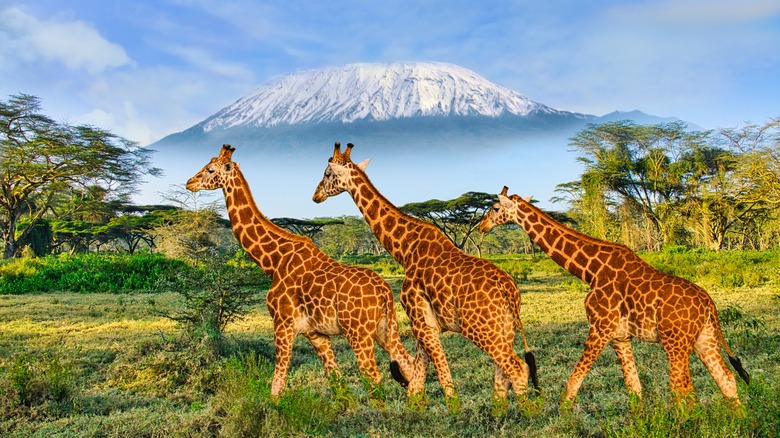
Our guide told us a giraffe’s neck has the same number of bones as ours, just each one is enormous, and my daughter would not stop talking about it for the rest of the trip. It is the small facts like that which she actually remembers, not just the photos.
— Sense of Adventure guest, family safari to Amboseli and Masai Mara
6 Kenya Safari Animal Facts Worth Knowing Before You Go
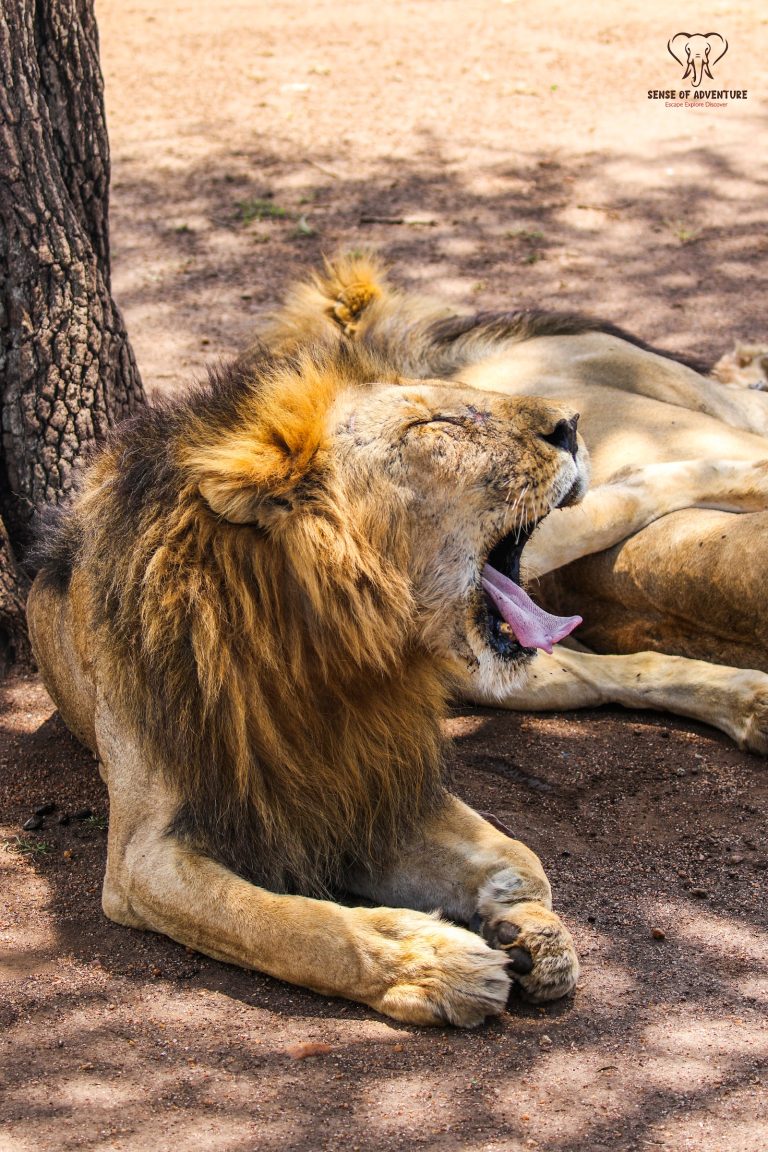
1. Lions — a single male can hold up to 400km² of territory
Male lion territories in the Mara ecosystem range from 30 to 400 square kilometres depending on prey density, and it is the lionesses, not the males, that do almost all of the hunting. The Mara’s 850-900 lions make it one of the most reliable places on the continent to watch this play out.
2. Elephants — a 22-month pregnancy and a matriarch-led herd
African elephants carry their young for up to 22 months, the longest gestation of any land mammal, and live in herds led by the oldest female rather than a dominant male. Amboseli’s swamp-fed population includes some of the last remaining big tuskers in Africa, which is why our Amboseli Elephant Photographic Safari is built around this park specifically.
3. Giraffes — a 50cm tongue built to survive the sun
A giraffe’s tongue can reach 50 centimetres and is darkened with melanin specifically to prevent sunburn while browsing thorny acacia for hours in direct sun. Their necks contain the same seven vertebrae found in every mammal, including humans, just stretched dramatically longer.
4. Hippos — heavier than a small car, and far more dangerous than they look
An adult male hippo can weigh close to 1,500 kilograms and spends most daylight hours submerged to protect its skin, only emerging at night to graze. Guides across Kenya treat hippo encounters with more caution than lion encounters, because a charging hippo is fast, unpredictable and fiercely territorial over water.
5. Cheetahs — built for a 110 km/h sprint, not a chase
Cheetahs can hit 110 km/h in short bursts but can only sustain that speed for around 20-30 seconds before overheating, so a failed sprint means the hunt is over entirely. The Mara Cheetah Project tracks roughly 80 named individuals across the ecosystem, one of the largest monitored cheetah populations anywhere.
6. Nile Crocodiles — a 22kN bite behind the Mara River drama
Adult Nile crocodiles in the Mara River can reach 5 metres and 750 kilograms, with a bite force strong enough to hold a struggling wildebeest underwater during the river crossings the Great Migration is famous for. They can also survive over a year between meals, which is why they wait motionless for months at a time.
Turn These Facts Into Your Own Sightings
Message us with your travel dates and we will build a Kenya safari around the wildlife you most want to see.
Kenya Safari Animal Facts: Quick Reference
- Fastest: the cheetah, reaching 110 km/h in short bursts of 20-30 seconds.
- Heaviest: the male African elephant, up to 6.6 tons, the world’s largest land animal.
- Longest tongue: the giraffe, at 50cm and darkened to prevent sunburn.
- Longest pregnancy: 22 months for an elephant calf, the longest of any land mammal.
- Most underestimated danger: the hippo, weighing up to 1,500kg and more aggressive than its lazy daytime pose suggests.
- Strongest bite: the Nile crocodile, capable of holding prey underwater during Mara River crossings.
Where to See These Animals on a Kenya Safari
Every animal above has a park where it is easiest to see, and most Kenya itineraries combine two or three of them. Our Big Five Kenya guide and our African elephant safari guide go deeper into exactly where and when each species is most active. If it is the Great Migration’s river crossings and crocodile action you want, our Great Migration Photographic Safari and our Amboseli Elephant Photographic Safari are both built specifically around these encounters.
These Facts Are Better Experienced Than Read
Message us today and let us plan the Kenya safari that puts you in front of these animals in person.
Frequently Asked Questions
What is the most surprising Kenya safari animal fact?
One of the most surprising Kenya safari animal facts is that the hippo, not the lion, is considered the most dangerous animal guides encounter, largely due to its unpredictable charges and territorial aggression around water despite weighing up to 1,500kg and looking placid by day.
What is the fastest animal you can see on a Kenya safari?
The cheetah is the fastest animal on a Kenya safari, reaching speeds of up to 110 km/h in short bursts, though it can only sustain that pace for 20-30 seconds before it must abandon the chase and rest.
How long is an elephant’s pregnancy compared to other animals?
An African elephant’s pregnancy lasts around 22 months, the longest gestation period of any land mammal, roughly double a giraffe’s and more than three times a lion’s, which is one reason elephant calves are unusually mobile and aware within hours of birth.
Why do lions live in prides but leopards live alone?
Lions live in prides because cooperative hunting and shared cub-rearing improve survival on open plains, while leopards hunt alone and rely on stealth and tree cover, making solitary territories more effective for an ambush predator in dense riverine habitat.
Are Nile crocodiles dangerous to tourists on safari?
Nile crocodiles are not a real danger to tourists on a standard vehicle-based Kenya safari, since sightings happen from a safe distance at river crossings or waterholes. They are genuinely dangerous to wildlife and to anyone entering the water, which is why walking safaris near rivers always keep a wide, guided berth.